
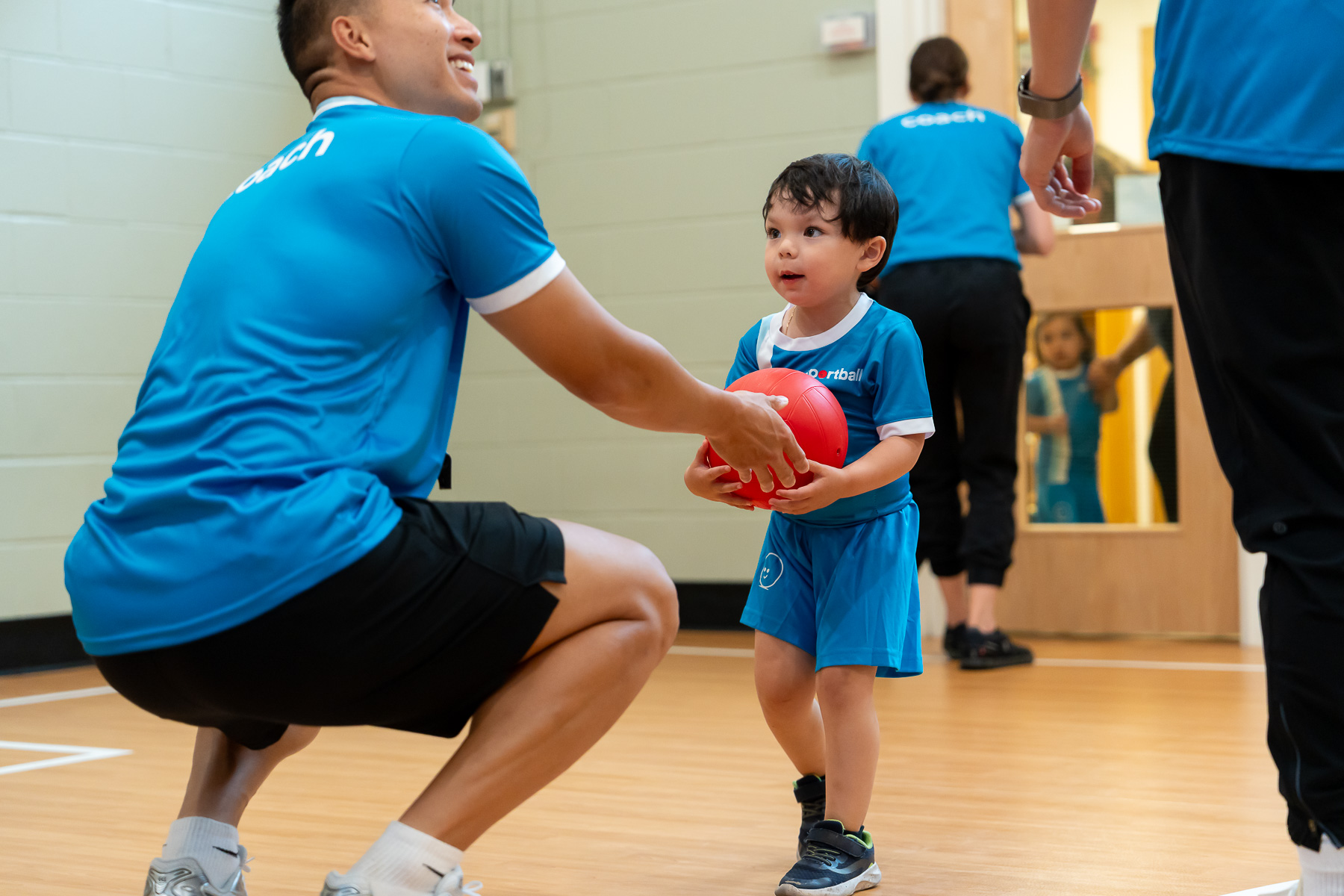
The kids sports franchise model has emerged as a scalable and resilient opportunity for entrepreneurs seeking a service-based, asset-light investment. While the broader youth sports industry spans competitive leagues, performance academies, club systems, and facility-based programs, the non-competitive, skills-based segment has grown rapidly as parents increasingly prioritize early childhood development over performance outcomes.
For investors, operators, and franchise-curious professionals, understanding how the non-competitive kids sports franchise model works is essential for evaluating its suitability and long-term potential. This guide outlines the market forces, operational dynamics, and financial considerations that define this segment and highlights where Sportball fits within the landscape.
What is a Non-Competitive Kids Sports Franchise?
Non-competitive kids sports franchises operate as licensed business opportunities providing recreational sports programs focused on participation, fundamental skill development, and enjoyment rather than competitive outcomes. Franchisees deliver age-appropriate instruction in multiple sports through leagues, camps, clinics, and classes within exclusive geographic territories.
Understanding the Market
Why Non-Competitive Kids Sports Franchises Are Booming
The youth sports market in North America is a multi-billion-dollar industry. Within it, the non-competitive early childhood segment has seen significant momentum, driven by several macro trends:
1. Increased parent spending on development-focused programs
Parents are investing earlier and more consistently in structured activities that support coordination, confidence, and physical literacy.
2. Growing awareness of early skill acquisition
Research linking fundamental movement skills to cognitive and social development has encouraged families to seek structured, curriculum-based programs in a child’s earliest years.
3. A shift toward inclusive, low-pressure formats
Many families—particularly those with young children—are seeking alternatives to performance-driven league structures. Programs that emphasize early movement literacy without ranking, competition, or evaluation appeal to a wider audience and produce more predictable demand across seasons.
This market segment has become one of the most stable areas of youth sports franchising due to its broad accessibility and alignment with modern parenting preferences.
What Counts as a Kids Sports Franchise?
A kids sports franchise is a business model where an entrepreneur operates structured sports and physical-literacy programming for children—typically ages 1–12—under an established brand.
Core characteristics include:
- A structured curriculum
- Defined age group segments to ensure developmental appropriateness
- Seasonal or session-based enrollment cycles
- Part-time or full-time coaching teams
- Mobile or multi-location program delivery (schools, rec centers, gyms)
- A variable-cost model with lower fixed overhead than facility-based sports programs
Across the industry, kids sports franchises generally fall into two categories:
- Competitive league-based programs focused on gameplay, scoring, and team progression
- Non-competitive, skills-based programs focused on participation, movement literacy, and foundational development
Within this landscape, non-competitive models serve the broadest entry-level audience and are particularly well suited to early childhood.
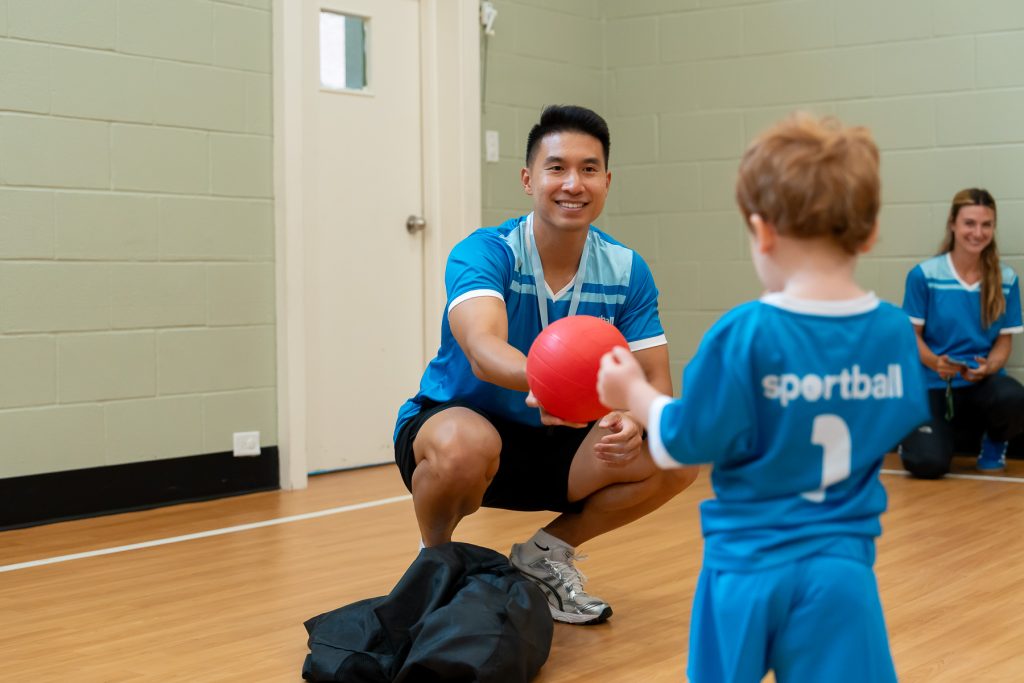
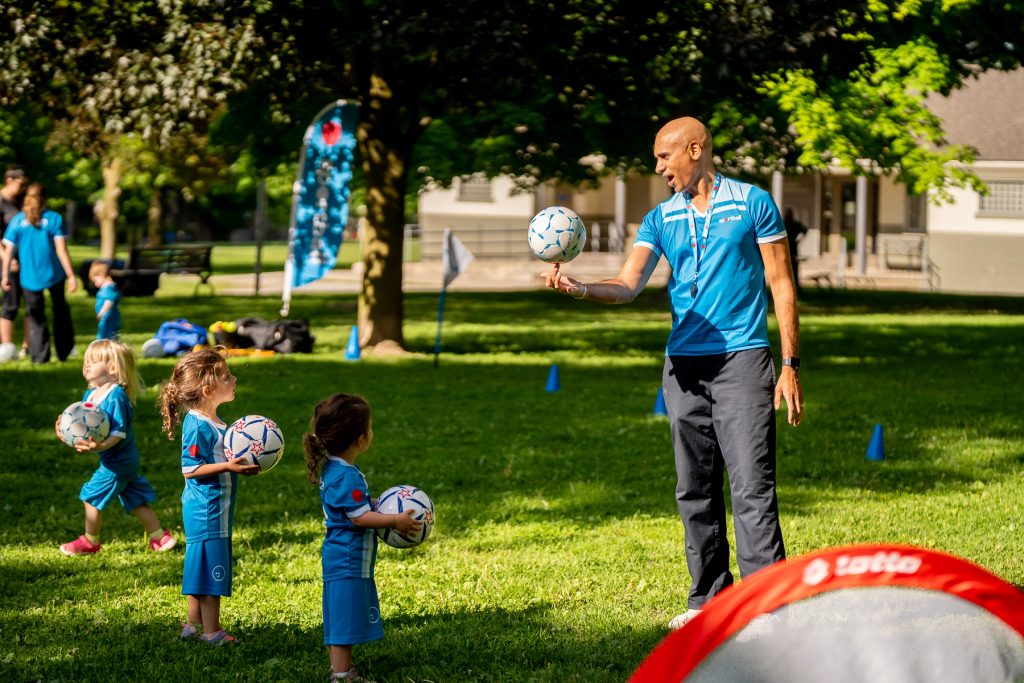
Sportball’s model sits firmly within this category. Rather than emphasizing performance, it focuses on building foundational movement skills, participation, and positive early experiences. Sportball pioneered the non-competitive multi-sport approach more than 30 years ago, introducing children to a broad range of skills across 8+ sports. This structure not only supports child development but also diversifies the service offering, helping to smooth demand across seasons.
How the Business Model Works
Core Components of a Non-Competitive Kids Sports Franchise Model
Program Delivery & Curriculum
Programs are typically structured into weekly classes, camps, after-school sessions, and seasonal blocks. A strong curriculum is essential because it:
- standardizes program quality across instructors
- supports measurable child outcomes
- simplifies training and scaling for franchisees
As non-competitive brands rely heavily on consistency and instructional quality, curriculum becomes a central operational differentiator.
Location & Facility Types
Most non-competitive kids sports franchises use a mobile or semi-mobile model. Programming may occur in:
- community centers
- schools
- daycares
- gymnasiums
- public parks
- private indoor spaces
This flexibility reduces capital expenditure and helps franchisees match offerings to local demand.
Staffing & Coaching Structure
Staffing generally consists of part-time or full-time coaches trained to deliver structured lessons. Franchise owners oversee recruitment, onboarding, and scheduling, supported by franchisor-provided tools and guidelines that help ensure consistency and program quality.
Parent Experience & Retention
Customer satisfaction directly influences retention, which is a major driver of long-term profitability. Parents evaluate programs based on:
- structure and predictability
- quality of skill development
- safety
- communication and responsiveness
In this segment, systems that support instructor consistency, curriculum fidelity, and parent communication significantly strengthen enrollment stability.
With more than 30 years of program evolution, Sportball delivers a research-backed curriculum designed to ensure each class is developmentally appropriate and engaging. Its structured coach training process—supported by a dedicated learning management system (LMS)—helps maintain program quality across locations. An exceptional product supported by smart systems give franchise owners a strong foundation for operational consistency and long-term customer retention.
Revenue Model Breakdown
Primary Revenue Streams
Most non-competitive kids sports franchises generate revenue from:
- weekly classes
- seasonal programs (10–14 week blocks)
- camps
- birthday parties
- after-school enrichment programs
- preschool/daycare partnerships
These diversified streams support steady enrollment throughout the year.
Secondary & Upside Revenue Streams
- municipal contracts
- private-group programming
- corporate partnerships
- branded merchandise
Territory characteristics influence revenue composition. For example, regions with greater public funding or large childcare networks may rely more heavily on institutional partnerships. As with any service business, aligning the offering with local market needs is critical for success.
Investment, Costs & Profitability
What It Costs to Start a Non-Competitive Kids Sports Franchise
Startup investment is generally lower than brick-and-mortar franchise categories due to the mobile, equipment-light model. You can expect an investment starting at $60,000 including:
- franchise fee
- starter equipment
- liability insurance
- initial marketing
- training and onboarding
- technology setup
- working capital
This makes the model accessible to a wide range of entrepreneurs and more cost-effective to scale across multiple territories.
Ongoing Costs You Should Expect
The variable cost nature of the business sees the following costs scale with the business:
- coach payroll
- facility rental fees
- royalties and ad-fund contributions
- local marketing
- technology costs
- insurance
- equipment refresh
Because the model is not tied to a fixed facility, overhead remains low and predictable.
What Drives Profitability
Profitability in this segment depends on:
- expanding programs to new locations
- increasing the number of programming hours
- enrollment density
- schedule optimization
- retention and re-enrollment
- institutional partnerships
- efficient use of rented space
Sportball’s multi-sport programming is structured to support strong retention by keeping children engaged year-round and reducing churn associated with single-sport specialization. Its service window covering ages 1–12 extends the customer lifecycle, increasing lifetime value. Combined with insights generated through Sportball’s corporate-run locations—where programming, systems, and operations are continuously tested and refined—franchisees benefit from a model built on decades of validated performance.
What makes non-competitive kids sports franchises attractive for investors?
They are scalable, require low overhead, operate on a mobile model, and offer predictable recurring revenue due to consistent enrollment cycles and high retention.
The Role of the Franchisor
What a Strong Franchisor Should Provide
Franchisor support plays a central role in a franchisee’s speed to profitability and long-term stability. Core supports include:
- proprietary curriculum
- coach training systems
- marketing frameworks
- technology platforms
- business operations guidance
- brand and reputation equity
- safety protocols
The strongest systems provide not only tools but repeatable processes for enrollment, staffing, and scaling.
Evaluating Support Models
Prospective franchisees should consider:
- How is curriculum developed and maintained?
- What tools support scheduling, customer management, and back-office functions?
- Does the brand provide professional marketing assets?
- How experienced and stable is the support team?
- How well does the model scale across multiple territories?
Sportball stands out through its deeply experienced support team, including several members with more than 20 years of tenure who bring extensive institutional knowledge and proven operational practices. By developing and maintaining its own technology, Sportball ensures that business processes shape the platform—not the other way around—reducing workarounds and improving efficiency. In addition to core training and guidance, Sportball offers ad-hoc support across a variety of business functions, giving franchise owners access to expert resources throughout their growth journey.
Why Non-Competitive, Skills-Based Learning Works
The non-competitive model aligns with early childhood developmental research and maintains broad accessibility across diverse family types. It supports:
- longer retention due to consistent child engagement
- lower barriers to entry
- inclusive participation across skill and confidence levels
- strong word-of-mouth referral patterns
- predictable enrollment cycles
This philosophy is both a developmental advantage for children and a commercial advantage for franchisees.
Where Sportball Fits Into the Landscape
Sportball occupies a well-established position within the non-competitive kids sports franchise market, offering:
- a proven multi-sport model
- more than 30 years of curriculum refinement
- strong brand recognition among parents
- a scalable, mobile operating structure
- tools and frameworks designed for sustainable, multi-territory growth
For investors seeking an asset-light business with strong margins, recurring revenue, and multi-decade operational credibility, Sportball represents a compelling option. Beyond financial performance, the model enables franchise owners to contribute meaningfully to early childhood development within their communities.