As of November 17, 2026. Financial performance figures are from our 2025 Franchise Disclosure Document (FDD).
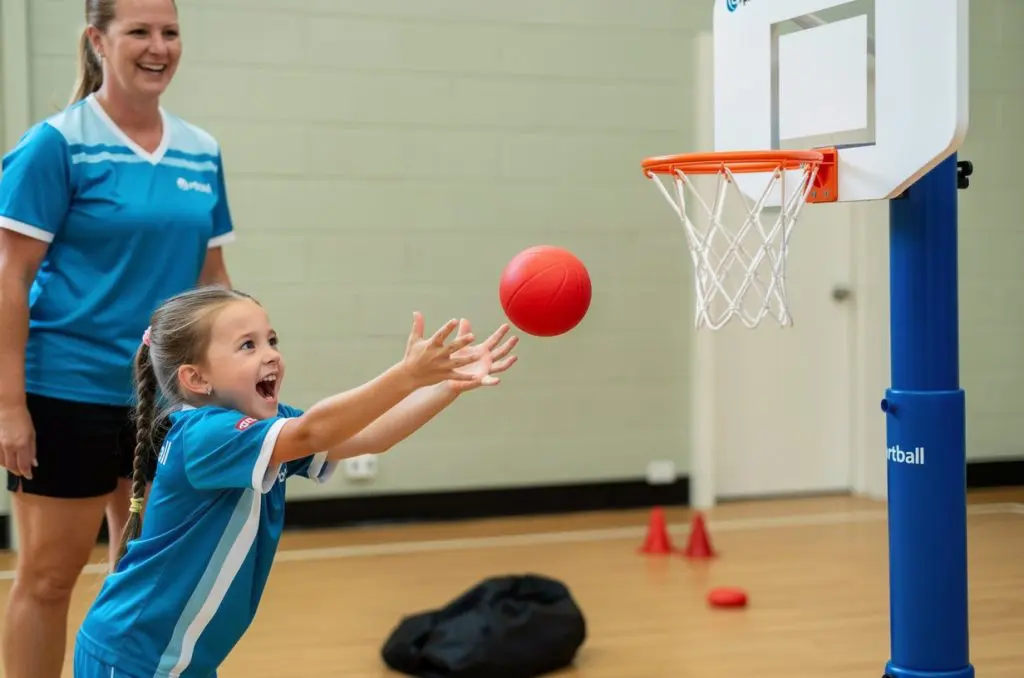
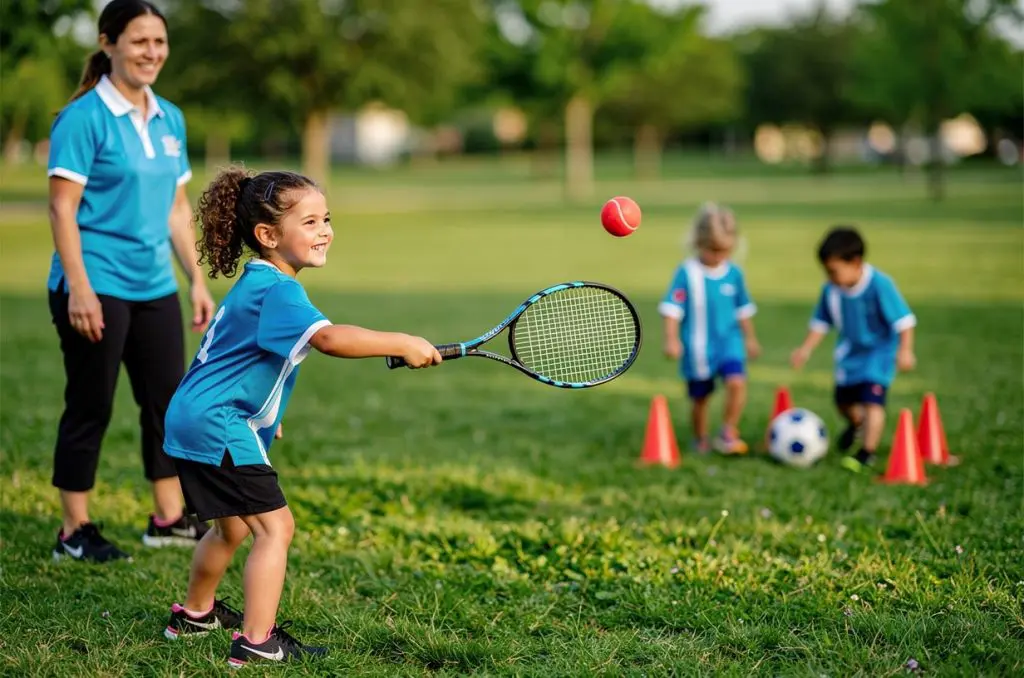
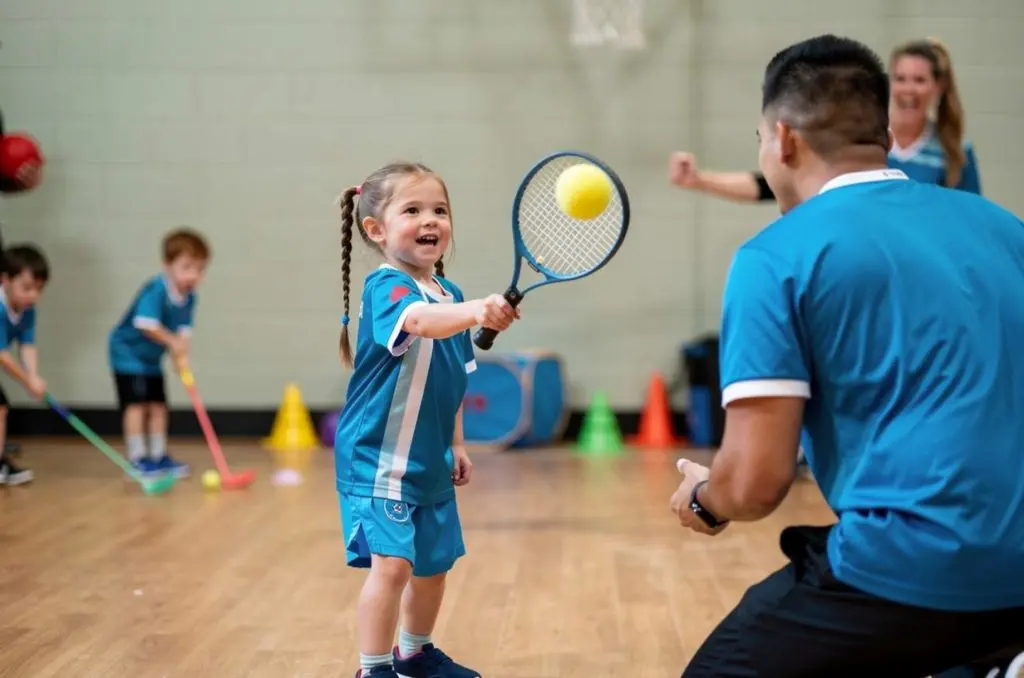
Sportball is a non-competitive, multi-sport youth franchise for children aged 16 months to 12 years, founded in Toronto in 1995 and franchising since 2005. The total initial investment is $160,000: a $60,000 franchise fee plus $100,000 in operating capital. Ongoing fees are an 8% royalty and a 2% ad fund fee on gross sales. Our 2025 FDD Item 19 reports average gross sales of $270,686, median gross sales of $215,604, and highest gross sales of $653,458. Territories are exclusive and cover about 400,000 people. Programs run in schools, child care centers, community centers, and parks, so there is no storefront, lease, or build-out.
This report summarizes the offer in one place. It is not the Sportball franchise disclosure document and does not replace it. The FDD is the legal document, and we provide it during the discovery process described below.
The business model at a glance
| Item | Detail |
|---|---|
| Franchisor | Sportball Systems Inc., Thornhill, Ontario |
| Premises | No storefront, lease, or build-out |
| Time from first call to opening | Typically 2 to 6 months |
| Average tenure of current franchisees | 7.5 years |
| In-house financing | Not offered |
Initial investment: $160,000
The total initial investment for a Sportball franchise is $160,000. It has two parts.
- Franchise fee: $60,000.
- Operating capital: $100,000. This is enough to run the business over its first several months.
- Equipment. Each new owner starts with one multi-sport equipment set and one t-ball/soccer equipment set.
- What is not in the budget. Programs run in shared spaces rented by the hour, such as school gyms, child care centers, community centers, churches, and parks. Owners do not sign a retail lease or build out a facility. Some run the business from home.
- Financing. We do not offer in-house financing. Prospects who need a loan arrange it with their own lender, and they start that conversation in the first week of discovery.
- Net worth. We do not set a minimum net worth or liquid capital figure. Owners need enough capital to start the business and run it for several months.
The figures on this page are our current figures and supersede earlier published estimates.
Fees: 8% royalty, 2% ad fund
Franchisees pay two ongoing fees, both calculated on gross sales.
| Fee | Rate | Basis |
|---|---|---|
| Royalty | 8% | Gross sales |
| Ad fund | 2% | Gross sales |
| Total | 10% | Gross sales |
Together the two fees total 10% of gross sales. Because they are charged on gross sales, they are owed whether or not the territory is profitable in a given period.
Financial performance: Item 19
Our 2025 FDD reports the following gross sales figures in Item 19.
| Measure | Gross sales |
|---|---|
| Average | $270,686 |
| Median | $215,604 |
| Highest | $653,458 |
Source: 2025 Sportball FDD, Item 19.
Three points to keep in mind when reading these numbers.
- They are gross sales, not profit. They are stated before the royalty, the ad fund fee, coach wages, venue rental, insurance, marketing, and every other cost of running the business.
- The median is lower than the average. At least half of the units counted had gross sales at or below $215,604. Because the median is below the average, at least half of the units counted were below the average too, so the median is the more cautious reference point.
- The notes belong with the numbers. This page gives the three headline figures only and does not reproduce the Item 19 notes. Read the complete Item 19 in the FDD, including its notes, before relying on any figure here. Individual results differ, and these figures do not predict what a new territory will earn.
The Federal Trade Commission explains that Item 19 holds the claims a franchisor chooses to make about sales or earnings, that the Franchise Rule does not require a franchisor to provide this information, and that any such claim must appear in Item 19. See the FTC’s A Consumer’s Guide to Buying a Franchise. We go through the numbers with each prospect in the financial stage of discovery, when the finance team reviews the FDD with them.
Territories of about 400,000
- Size. Territories typically cover about 400,000 people. In some cases we adjust for geography or demographics.
- Exclusivity. Territories are exclusive. The owner has the sole right to run Sportball programs inside the territory.
- How a territory grows. One territory runs programs at many partner venues. Owners grow by adding coaches, programs, and venues inside the territory, not by opening new units.
U.S. states with territories available
We have territories available for franchise development in 38 states and the District of Columbia: Alabama, Alaska, Arizona, Arkansas, Colorado, Connecticut, Delaware, District of Columbia, Florida, Georgia, Idaho, Iowa, Kansas, Kentucky, Louisiana, Maine, Massachusetts, Michigan, Mississippi, Missouri, Montana, Nebraska, Nevada, New Hampshire, New Jersey, New Mexico, North Carolina, Ohio, Oklahoma, Oregon, Pennsylvania, South Carolina, South Dakota, Tennessee, Texas, Utah, Vermont, West Virginia, and Wyoming.
In Arizona, Massachusetts, and Texas, available territories sit outside our existing ones: Phoenix; Boston South; and Austin, North Houston, Katy-Sugarland, San Antonio East, Dallas-Plano, and Frisco-McKinney. Availability changes as territories are awarded, so check the territories map or ask a Growth Coach about a specific city.
System facts and unit count
| Fact | Figure |
|---|---|
| Founded | 1995 in Toronto, with three children at one location |
| Kids reached | 70,000+ a year |
| Countries | Four: Canada, the U.S., Singapore, and India |
| Program locations | 900+ schools, child care centers, community centers, and other partner venues |
| Average tenure of current franchisees | 7.5 years |
| Ages served | 16 months to 12 years |
| Core sports | Eight: soccer, basketball, baseball/t-ball, football, hockey, volleyball, tennis, and golf |
| Ownership | Acquired by GoodCapital in 2023 |
| Memberships | International Franchise Association |
Program locations are not franchise units. The 900+ figure counts the venues where kids take classes. A franchise unit is a territory, and each territory runs programs at many venues.
Unit count. In April 2026, Franchise Times reported that Sportball had eight units in the U.S., 22 in Canada, one in Singapore and one set to open in New Delhi that June. That is a dated snapshot. Under the FTC Franchise Rule, Item 20 of an FDD lists franchised and company-owned outlets for each of the last three fiscal years, along with contact details for current franchisees. Item 20 of our FDD is the place to check the current count and to find owners to call.
Training and support
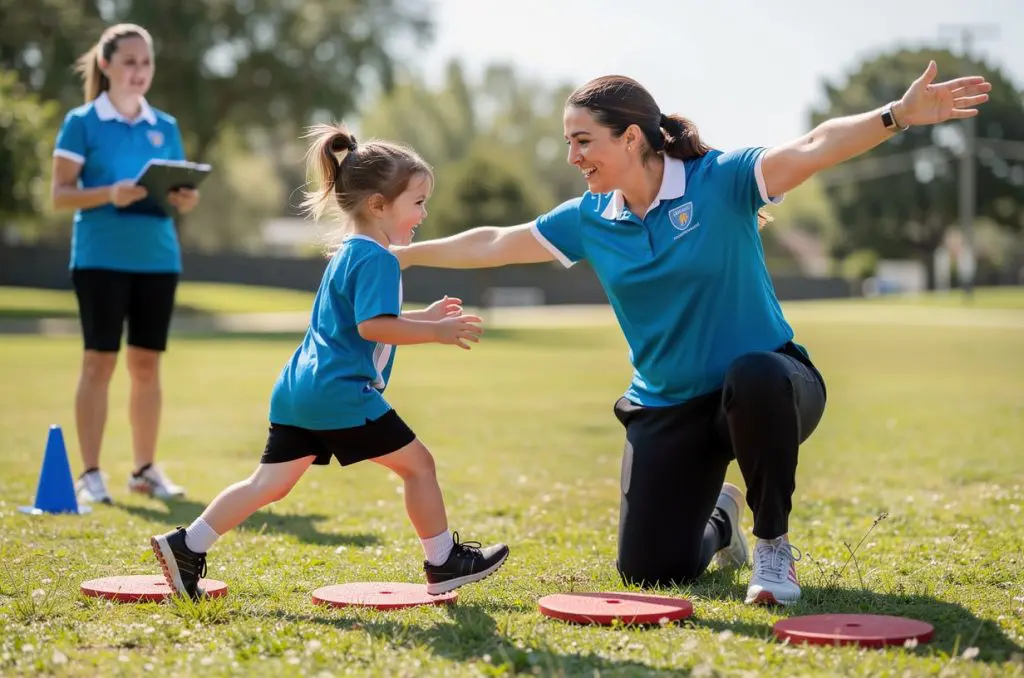
- In-person training: 1 to 2 weeks on the Sportball methodology before launch.
- Sportball University: an 8-week launch program.
- Growth Coach mentorship: three months of immersive mentorship during setup. Growth Coaches are experienced operators who have run their own operations.
- After launch: ongoing Growth Coach support and group development sessions.
- Coach development: a four-level certification path (Rookies, Leads, Mentors, Masters) with online lesson plans, workshops, and skill demonstration videos.
- Playbooks and marketing: operating playbooks built from three decades of experience, a corporate brand team, and local marketing guidance.
The curriculum itself was built with the University of Toronto and the Children’s Hospital of Eastern Ontario (CHEO), so owners do not design programs from scratch. See Training & Support for the full list.
Technology
Our proprietary registration platform, app.sportball.com, is exclusive to Sportball franchisees. It sits alongside the other tools below.
| Tool | What it does |
|---|---|
| app.sportball.com | Proprietary registration platform for families, built after the 2023 acquisition |
| Sportball Central | Back-end admin covering CRM and payments |
| Automated email | Automated email communication with families |
| Analytics and KPI reporting | Visibility into registrations, revenue, and business performance |
| SportballGPT | AI assistant for franchise owners |
The discovery process: 12 weeks
Discovery runs as a 12-week program. Each prospect builds and presents a business plan for their own territory, so both sides can confirm the fit before anything is signed. The 12 weeks cover the seven steps on our homepage, from Sportball Introduction to Welcome to the Team.
| Weeks | Stage | What happens |
|---|---|---|
| 1 | Territory discovery | Rough territory boundary, business plan framework, market and competitor research. Prospects who need financing start talking with their lender. |
| 2–3 | Marketing | Call with our Marketing Director, then a customer and marketing plan. |
| 4–5 | Operations | Call with the operations team on product, playbooks, and technology. Scout at least 20 potential venues and contact 10 or more. Research the local coach talent market. Talk with current franchisees. |
| 6–7 | Financial | Review the FDD with the finance team, build program economics and a financial plan, complete a police check and vulnerable sector clearance. |
| 8 | Discovery Day | Visit headquarters, meet the team, coaches, and customers, and see a class in person. Prospects often join one. |
| 9 | Presentation day | Present the business plan to our CEO and Growth Coach. If the plan is accepted, we extend an official invitation, and the prospect sets up financing, a legal entity, and a bank account. |
| 10–12 | Agreement | Finalize the territory, FDD, and franchise agreement. Sign after the required 14-day disclosure period. Build the training schedule and meet onboarding support. |
The 14-day disclosure period. Under the FTC Franchise Rule, a franchisor must give a prospect its current disclosure document at least 14 calendar days before the prospect signs a binding agreement or makes any payment. Ontario, where we are headquartered, also requires a disclosure document at least 14 days before signing or payment. Use that time to read the whole document and to take it to a franchise lawyer and an accountant.
From first call to opening: typically 2 to 6 months, depending on the prospect’s pace through the business plan.
To start, request information through the homepage form or book a call with a Growth Coach.
Who the franchise is built for
- Full-time leadership. We strongly recommend at least one full-time leader from day one. Owners may start part-time during setup, but we do not recommend running the business part-time.
- No sports background required. Most franchise partners come from business or child enrichment backgrounds.
- The core skill is leading coaches. Recruiting, hiring, and training coaches is the central job, and owners consistently name it as the hardest part. As Luke Lavorato of Sportball Edmonton puts it: “We don’t sell widgets; we sell children’s programming. So your coaches are your product.”
Frequently asked questions
How much does a Sportball franchise cost?
The total initial investment is $160,000: a $60,000 franchise fee plus $100,000 in operating capital to run the business over its first several months. Ongoing fees are an 8% royalty and a 2% ad fund fee on gross sales.
How much does a Sportball franchise make?
Our 2025 FDD Item 19 reports average gross sales of $270,686, median gross sales of $215,604, and highest gross sales of $653,458. These are gross sales, not profit, and they do not predict the results of any new territory. The full Item 19, with its notes, is in the FDD.
How do I get the Sportball FDD?
We provide the FDD during discovery, and the finance team reviews it with each prospect in weeks 6 and 7. The franchise agreement is signed only after the required 14-day disclosure period. Start by requesting information.
Does Sportball offer financing?
No. We do not offer in-house financing. Prospects who need a loan arrange it with their own lender, starting in the first week of discovery.
Is a Sportball territory exclusive?
Yes. Territories typically cover about 400,000 people, and the owner has the sole right to run Sportball programs inside the territory.
More answers are on our franchise FAQ.
State registration disclosure
This information is not intended as an offer to sell, or the solicitation of an offer to buy, a franchise. It is for informational purposes only. We will not offer you a franchise unless we have complied with applicable pre-sale registration and disclosure requirements in your state. Currently, the following states regulate the offer and sale of franchises: California, Hawaii, Illinois, Indiana, Maryland, Michigan, Minnesota, New York, North Dakota, Rhode Island, South Dakota, Virginia, Washington, and Wisconsin. Within the U.S.A., we offer franchises solely by means of our Franchise Disclosure Document (FDD). There are also countries outside the U.S.A. that have laws governing the offer and sale of franchises. If you are a resident of one of these states or countries, we will not offer you a franchise unless and until we have complied with pre-sale registration and disclosure requirements that apply in your jurisdiction.