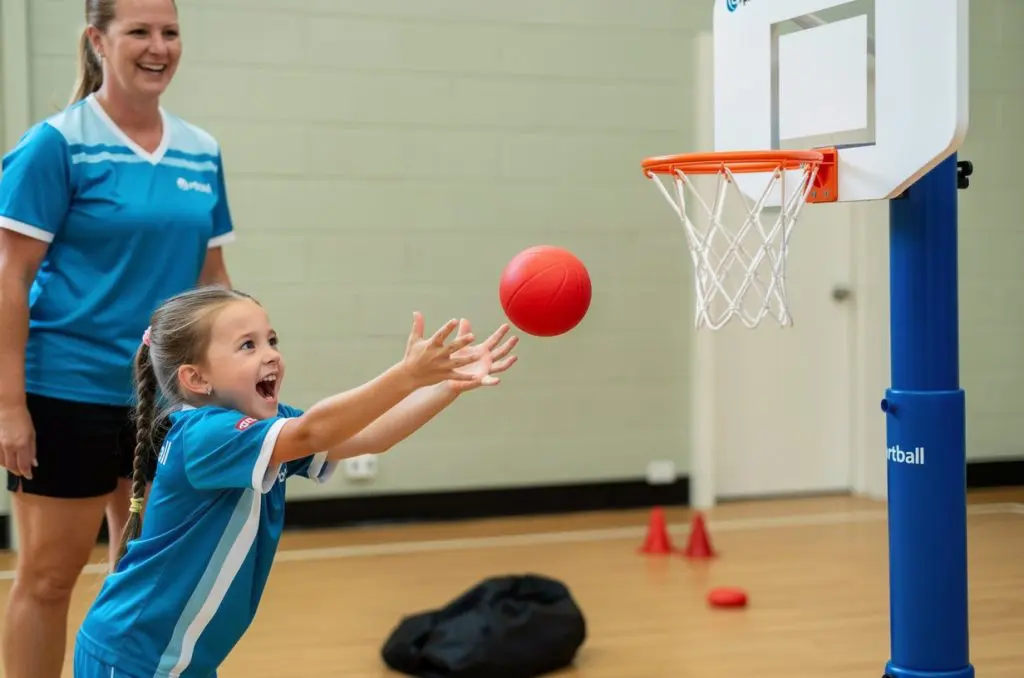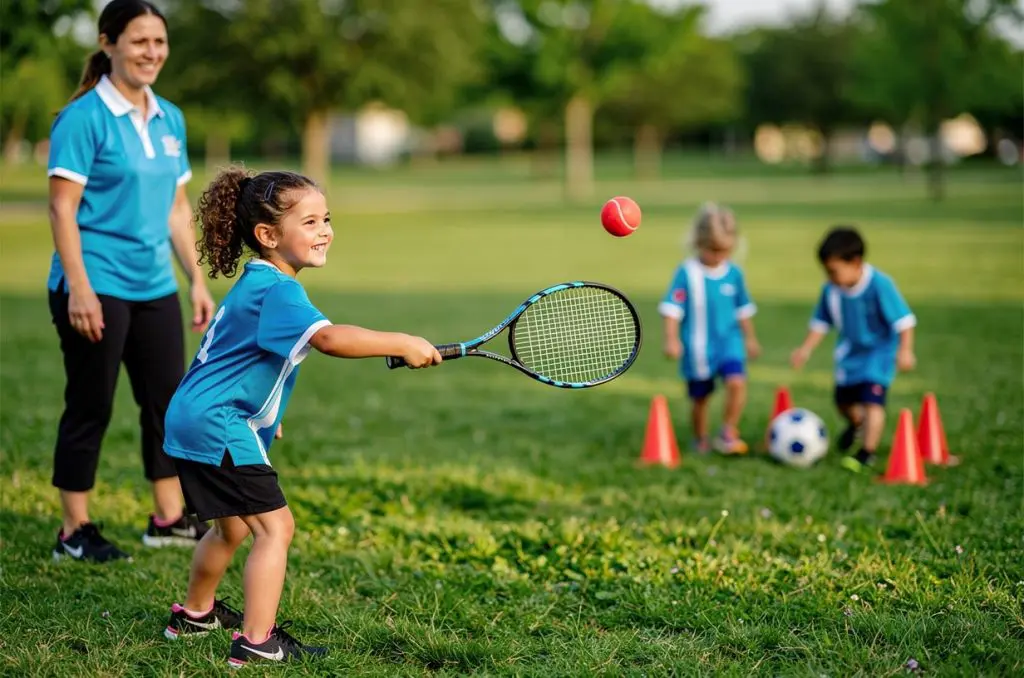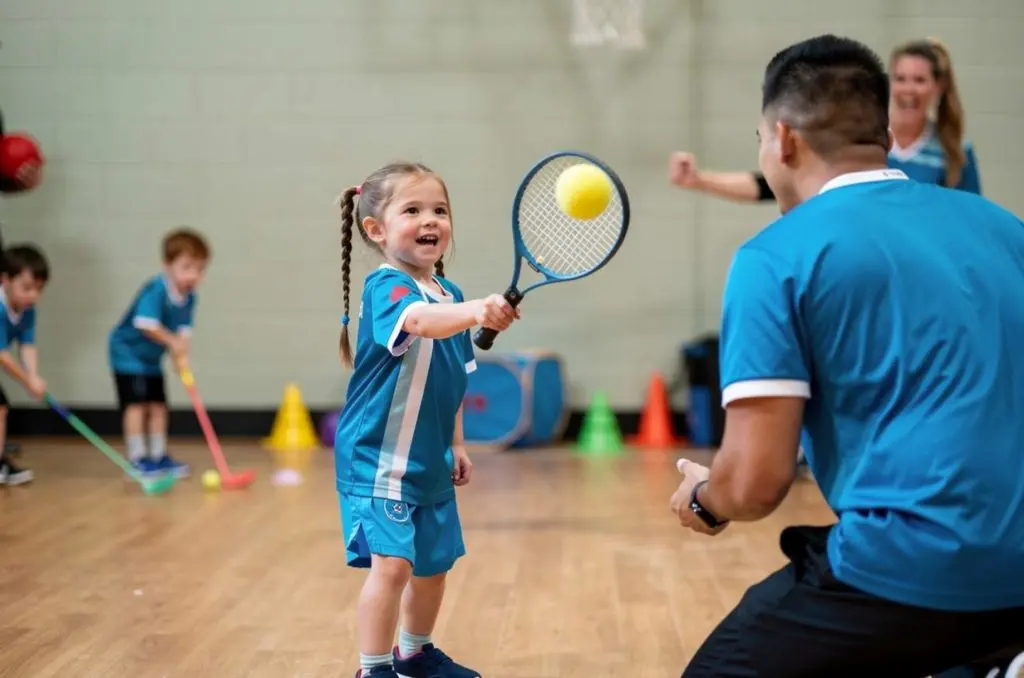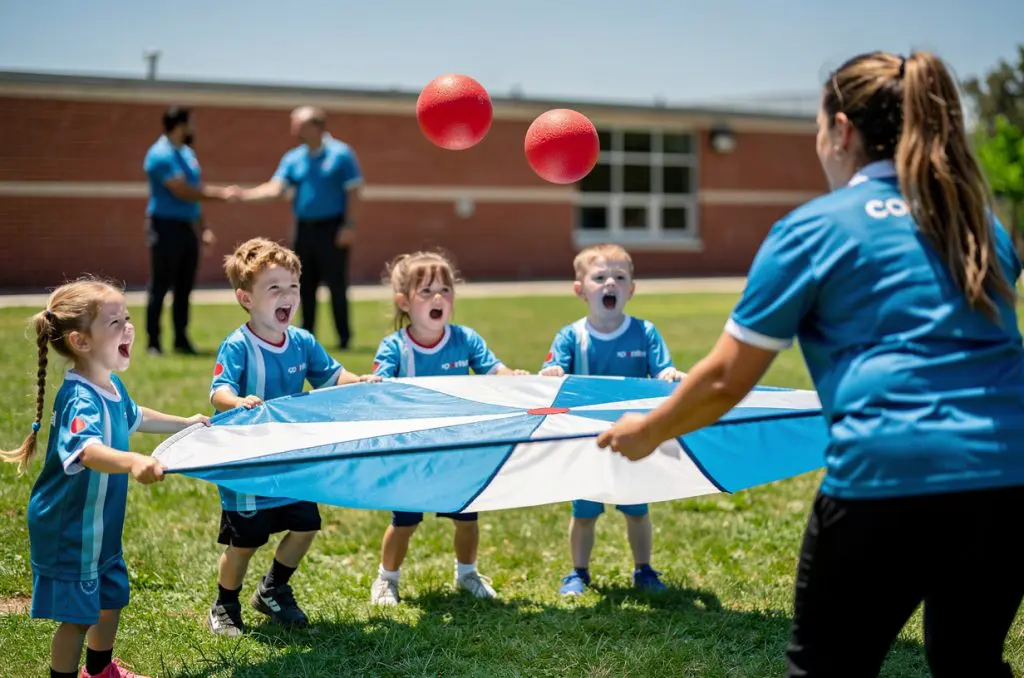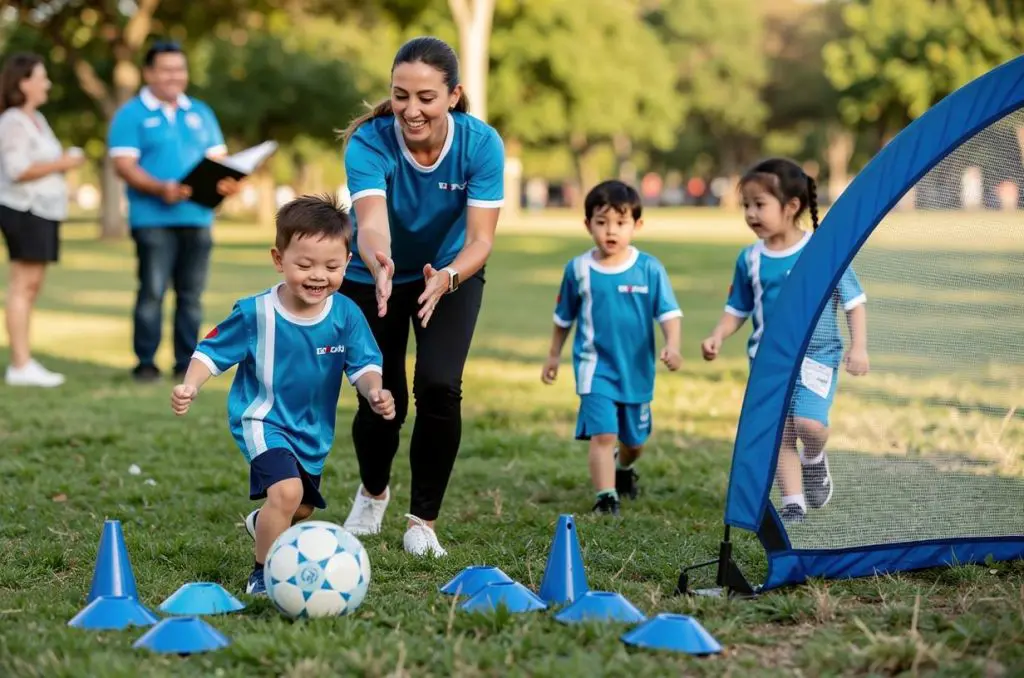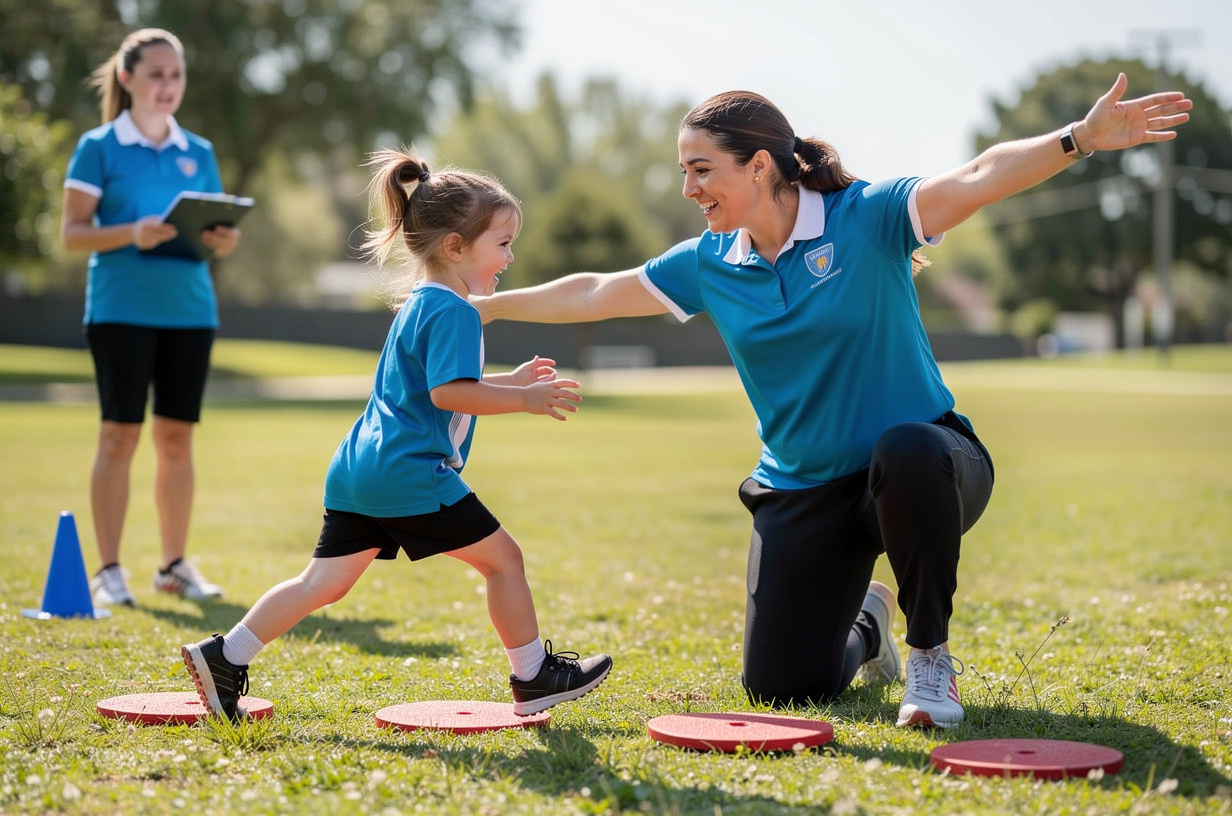
Sportball franchise training and support runs from discovery through ongoing coaching: a 12-week discovery program in which you build your own business plan, 1 to 2 weeks of in-person training on the Sportball methodology, an 8-week launch program called Sportball University, and three months of immersive mentorship from a Growth Coach who has run their own operation. After opening, Growth Coach support continues alongside group development sessions with other owners.
This article sets those stages out in order, from Discovery Day to your first season of classes, including what the support does not do for you. Our FAQ has the short version.
Training and support at a glance
| Stage | Length | What happens | Who supports you |
|---|---|---|---|
| Discovery | 12 weeks | You research your territory, scout venues, review the FDD, and build a business plan | Growth Coach, Marketing Director, operations and finance teams |
| Discovery Day | Week 8 of discovery | You visit headquarters, meet the team, coaches, and customers, and see a class in person | Head office team and coaches |
| In-person training | 1 to 2 weeks, before launch | You learn the Sportball methodology on site | Sportball team |
| Sportball University | 8 weeks | Our launch program for new owners | Sportball team |
| Setup mentorship | 3 months | Immersive mentorship while you set up the business | Your Growth Coach |
| After launch | Ongoing | One-to-one coaching plus group development sessions with other owners | Your Growth Coach and the owner network |
Becoming a franchisee typically takes 2 to 6 months from first call to opening, depending on how quickly you move through the business plan process. The 12-week timetable is the standard pace, and some candidates move faster or slower.
Discovery: before you sign
Our discovery process works more like a course than a sales process. Over 12 weeks, each prospect builds and presents a business plan for their own territory, so both sides can confirm the fit before anything is signed. A Growth Coach works with you from the first call.
The work you do in discovery is the same work you will do as an owner:
- Week 1, territory: a rough territory boundary, a business plan framework, and market and competitor research. If you need financing, you start talking with your own lender this week, because we don’t offer in-house financing.
- Weeks 2–3, marketing: a call with our Marketing Director, then your own customer and marketing plan.
- Weeks 4–5, operations: a call with the operations team on the product, growth playbooks, and technology. You scout at least 20 potential venues, contact 10 or more, research the local market for coaches, and talk with current franchisees.
- Weeks 6–7, financial: you review the Franchise Disclosure Document (FDD) with our finance team, build your program economics and financial plan, and complete a police check and vulnerable sector clearance.
- Week 8, Discovery Day.
- Week 9, presentation day: you present your plan to our CEO and your Growth Coach. If the plan is accepted, we extend an official invitation, and you set up financing, a legal entity, and a bank account.
- Weeks 10–12, agreement: you finalize the territory, FDD, and franchise agreement, sign after the required 14-day disclosure period, build your training schedule, and meet your onboarding support.
By presentation day you have a list of venues you have already called, a view of where your coaches will come from, and a financial plan you built yourself. That is a head start on launch, and it is also a fair test of whether you enjoy the work.
What happens at Discovery Day
Discovery Day falls in week 8. You visit our headquarters, meet the team, coaches, and customers, and see a class in person. Prospects often join one. The point is to see the product firsthand before you present your plan, because the product is a coach in a gym with a group of young kids, and no slide deck conveys it.
Luke Lavorato, who has run Sportball Edmonton for about 18 years, remembers his first Sportball class: “Man, I’m so wrong. This is so cool. This is exactly how kids should be learning sports.”
The 14-day disclosure period
In the U.S., federal rules require a franchisor to provide its disclosure document at least 14 calendar days before a prospect signs a binding agreement or makes any payment. Our process builds that period into weeks 10 to 12. Use it to read the FDD closely and to call current owners.
Pre-launch training
New owners arrive with very different gaps. As we put it in our owner stories, Jake Weston of Sportball Hamilton came in as a teacher and had to learn business, while others arrive from corporate careers and have to learn what a great class for three-year-olds looks like. Training covers both.
In-person training (1 to 2 weeks)
Before launch you spend 1 to 2 weeks on site learning the Sportball methodology, the approach behind every class. The curriculum was developed with the University of Toronto and the Children’s Hospital of Eastern Ontario (CHEO), and you don’t have to design any of it. You do have to know it well enough to teach it, because you will train your coaches.
A sports or coaching background isn’t required. Most franchise partners come from business or child enrichment backgrounds. Maddie Vera, who has run Sportball Brooklyn for about 16 years, came from dance franchising and martial arts with, in her words, “not a lot of experience with sports.”
Sportball University (8 weeks)
Sportball University is our 8-week launch program. Alongside it you get direct access to playbooks developed from three decades of experience. We don’t publish a week-by-week syllabus, so ask your Growth Coach to walk you through it during discovery.
Three months of Growth Coach mentorship
During setup, your Growth Coach provides three months of immersive mentorship. According to a Franchise Brief feature on our model, new owners also get a corporate team member who provides dedicated hours each week covering registration platforms, marketing assets, business development playbooks, HR, and training.
Who Growth Coaches are
Our Growth Coaches are seasoned operators who have run their own operations. When you ask how to approach a school principal, what to pay a lead coach or how many classes to open in a first season, the answer comes from someone who has made those calls with their own business.
Jason D’Rocha, our VP & Growth Coach, has been with Sportball for more than 20 years. The relationship has three phases:
- Discovery: your Growth Coach helps you understand your market and tests your business plan.
- Setup: three months of immersive mentorship as you hire, book venues, and open registration.
- After launch: ongoing coaching. The Franchise Brief feature describes biweekly calls with a dedicated Growth Coach and Monthly Growth Labs, where the franchise network shares best practices.
Owners also mentor each other. Jesse Schneider started as a coach at Sportball Edmonton in 2015, was mentored by Luke Lavorato, and opened the Okanagan territory in 2021. He has since added Vancouver Island.
Coach training
Hiring coaches is the hardest part of running a Sportball franchise. Maddie Vera says it plainly: “The hiring is by far the biggest challenge.” Luke Lavorato explains why it matters: “We don’t sell widgets; we sell children’s programming. So your coaches are your product.”
Trained coaches are scarce across youth sports. The Aspen Institute’s Project Play reports in its playbook that of 6.5 million youth coaches, fewer than 1 in 5 are trained in effective motivational technique and only 1 in 3 in sport skills or tactics. Its newer survey data shows more coaches have been trained at least once, but fewer report recent training: 29% had injury prevention training in the past 12 months in 2023, down from 34% in 2019. The playbook also cites a 1992 study by Barnett, Smoll, and Smith in which 5 percent of kids who played for trained coaches quit the sport the next year, against 26 percent otherwise.
So a large part of our support is a system for turning the people you hire into Sportball coaches:
- A four-level certification path: Rookies, Leads, Mentors, and Masters, with continuing training in childhood development and movement fundamentals.
- Online lesson plans, workshops, and skill demonstration videos. The Villalons, who own Sportball Austin and San Antonio East, say these materials “filled in a lot of gaps for us.”
- Training beyond sport delivery. The coach onboarding system covers how to engage families, manage classes, redirect behavior, and support children who feel nervous or have separation anxiety.
- Safety baseline: every coach completes First Aid and CPR training and a background check.
The system does not find coaches for you. Recruiting, hiring, and leading the team is the owner’s job. As we note in How to Run a Successful Sportball Business, owners are the mentor-level coaches who train their staff. Maddie Vera’s advice to new owners is to “teach the program yourself for at least a year,” then train others and move toward a split of “50% training and 50% business development.”
Technology and marketing support
The tools you are trained on are owned by Sportball and exclusive to our franchisees, alongside standard third-party software.
| Tool | What it does |
|---|---|
| app.sportball.com | Proprietary registration platform for families, built after our 2023 acquisition by GoodCapital |
| Sportball Central | Back-end admin covering CRM and payments |
| Automated email | Automated communication with families |
| Analytics and KPI reporting | Visibility into registrations, revenue, and business performance |
| SportballGPT | AI assistant for franchise owners |
On marketing, owners get a corporate brand team, a large catalog of marketing assets, ready-made templates for programs, email, and social campaigns, and local marketing guidance from their Growth Coach and our marketing team.
Your first season
A Sportball season is a block of classes that families register for, run in venues you rent by the hour or share with partners: schools, child care centers, community centers, churches, and parks. There is no storefront to lease or build out, so first-season preparation is about three things: venues, coaches, and registrations.
- Venues: you start from the 20 or more venues you scouted during discovery and work on turning those conversations into bookings. Maddie Vera’s rule for schools: “Get the demo. Get the demo. Get the demo, because once educators see, parents see this program in action, it’s hard for them to say no.”
- Coaches: you hire your first coaches and start them on the four-level certification path. Maddie Vera advises teaching the program yourself for at least a year.
- Registrations: registration opens before the first class. As the Franchise Brief feature puts it, “families are signing up and deposits are arriving before a single class is ever delivered.”
Growth after the first season comes from adding coaches, programs, and venues inside your exclusive territory, which typically covers about 400,000 people. Luke Lavorato started with classes of two or three kids. “The biggest thing that helped us to grow was running a great class,” he says. “So when you run a great Sportball class, word of mouth spreads.”
What the support does not do
- It does not run the business. Sportball is not for passive or semi-absentee investors. We strongly recommend at least one full-time leader from day one.
- It does not hire your team. We provide the certification path and training content. Finding people who are good with young children is local work.
- It does not replace effort. Alyssa and Mica Villalon tell prospects: “This is not the kind of business where you can just phone it in.”
- It does not include financing. The initial investment is $160,000: a $60,000 franchise fee plus $100,000 in operating capital, with an 8% royalty and a 2% ad fund fee on gross sales. You arrange any financing with your own lender. See our franchise information report for the full figures.
Jake Weston’s summary is a fair one: “There are a lot of tools in the toolbox at your disposal to give you a running head start as a business owner.”
How to check training claims
Item 11 of the FDD is where a U.S. franchisor discloses the assistance and training it provides. The U.S. Federal Trade Commission’s Consumer’s Guide to Buying a Franchise suggests asking what training and continuing support the franchisor provides, what backgrounds current owners have, and what current owners say about the quality and usefulness of the training they received. Item 11 opens with a required statement that the franchisor is not required to provide any assistance except as listed, so what is written there is what you can count on.
If Item 11 and conversations with owners still leave you unsure, the FTC’s guide suggests asking to review the training materials, and says to consider a different franchise opportunity if a franchisor refuses even when you offer to sign a confidentiality agreement.
The guide also recommends talking to several franchisees who have been in business just over a year, because they are best placed to say whether they were satisfied with the franchisor’s training and opening assistance, and to several who have been in business for five years. Our discovery process schedules conversations with current franchisees in weeks 4 and 5, and the FDD review with our finance team in weeks 6 and 7. Our current franchisees have been with us for an average of 7.5 years, so there are long-tenured owners to ask.
Questions worth putting to owners in any system:
- How much of the training was about the product and how much about running the business?
- Who do you call when something goes wrong, and have they run a unit themselves?
- What did the franchisor’s support not prepare you for?
- How long did hiring your first team take?
Frequently Asked Questions
How long is Sportball franchise training?
Training includes 1 to 2 weeks of in-person training on the Sportball methodology before launch, the 8-week Sportball University launch program, and three months of immersive Growth Coach mentorship during setup. Ongoing Growth Coach support and group development sessions continue after opening.
What is a Sportball Growth Coach?
A Growth Coach is an experienced operator who has run their own operation and who supports a franchisee from discovery through launch and beyond. Growth Coaches guide prospects through the business plan, mentor new owners for three months during setup, and provide ongoing coaching afterwards.
What happens at a Sportball Discovery Day?
Discovery Day takes place in week 8 of the 12-week discovery program. Prospects visit Sportball headquarters, meet the team, coaches, and customers, and see a class in person. Prospects often join a class. The following week they present their business plan to the CEO and their Growth Coach.
Do I need a sports or coaching background?
No. Most franchise partners come from business or child enrichment backgrounds. Experience working with kids helps, and the in-person training teaches the Sportball methodology. The core skill is recruiting, hiring, and leading a team of coaches.
How long does it take to open?
It typically takes 2 to 6 months from first call to opening, depending on how quickly a candidate moves through the business plan process.
Can I run it part-time or passively?
Sportball is designed as a full-time business and is not for passive or semi-absentee investors. Owners may start part-time during initial setup, but we strongly recommend at least one full-time leader from day one.
Start with a conversation
The first step is to watch the discovery video and book a call with a Growth Coach to talk through mutual fit, or email or call Jason D’Rocha from our Training & Support section. For current availability in a specific city, see our available territories or ask your Growth Coach, since availability changes as territories sell.
This information is not intended as an offer to sell, or the solicitation of an offer to buy, a franchise. It is for informational purposes only. Within the U.S., we offer franchises solely through our Franchise Disclosure Document. Certain states regulate the offer and sale of franchises, and we will not offer a franchise in those states until we have complied with applicable pre-sale registration and disclosure requirements.