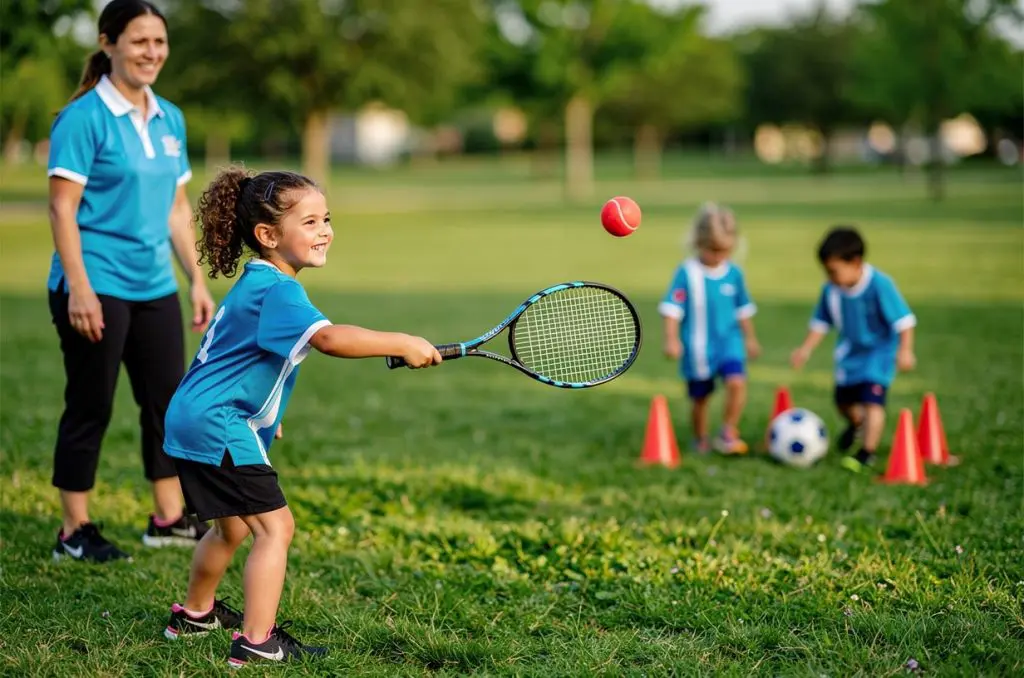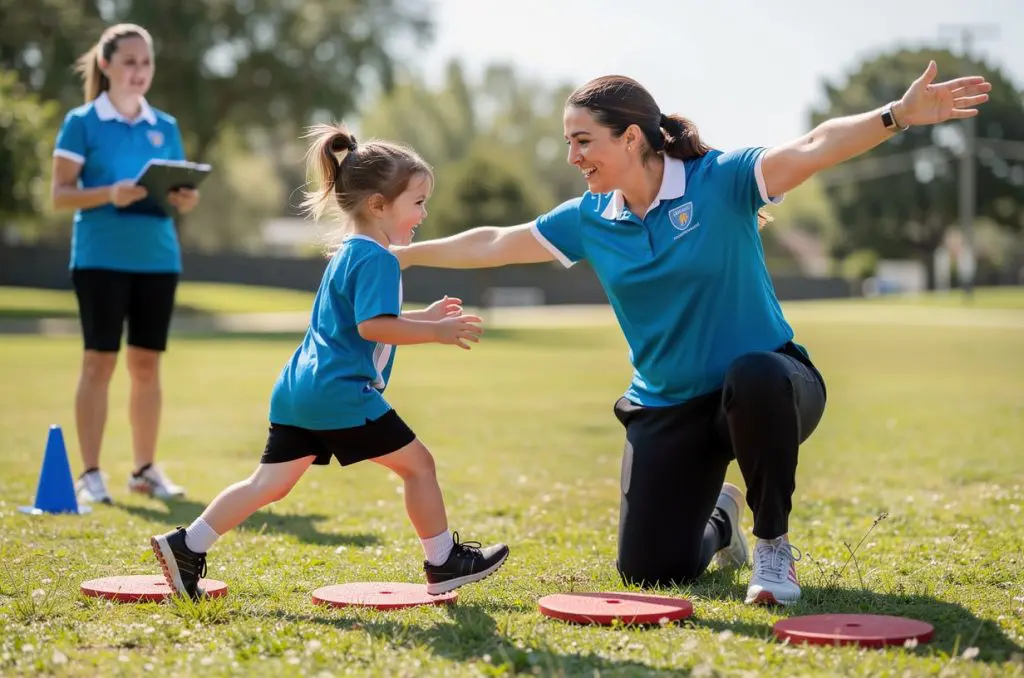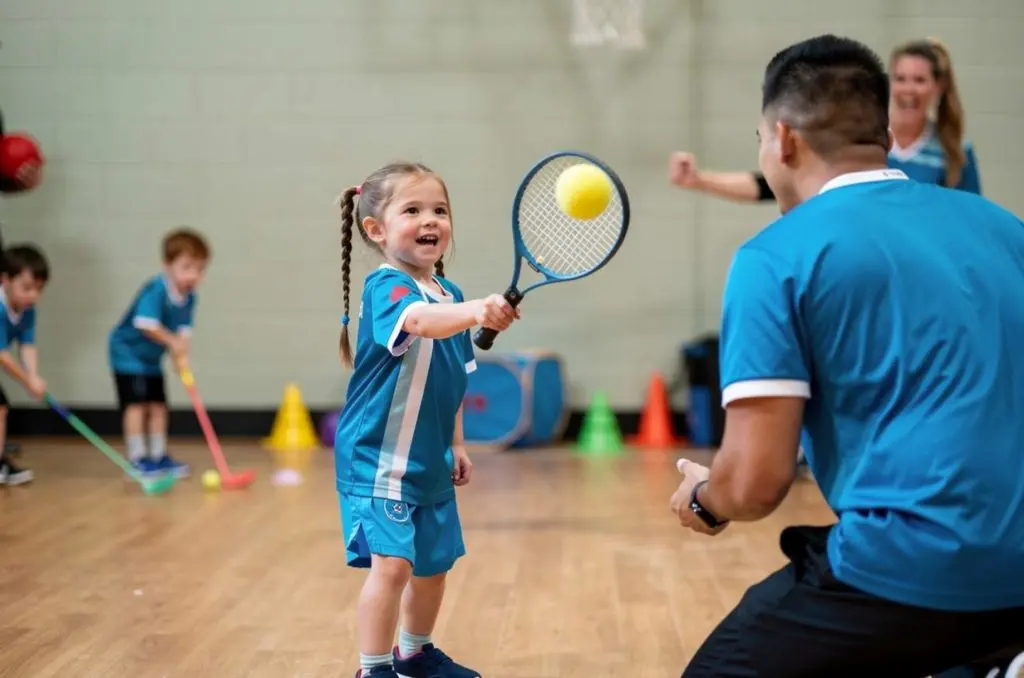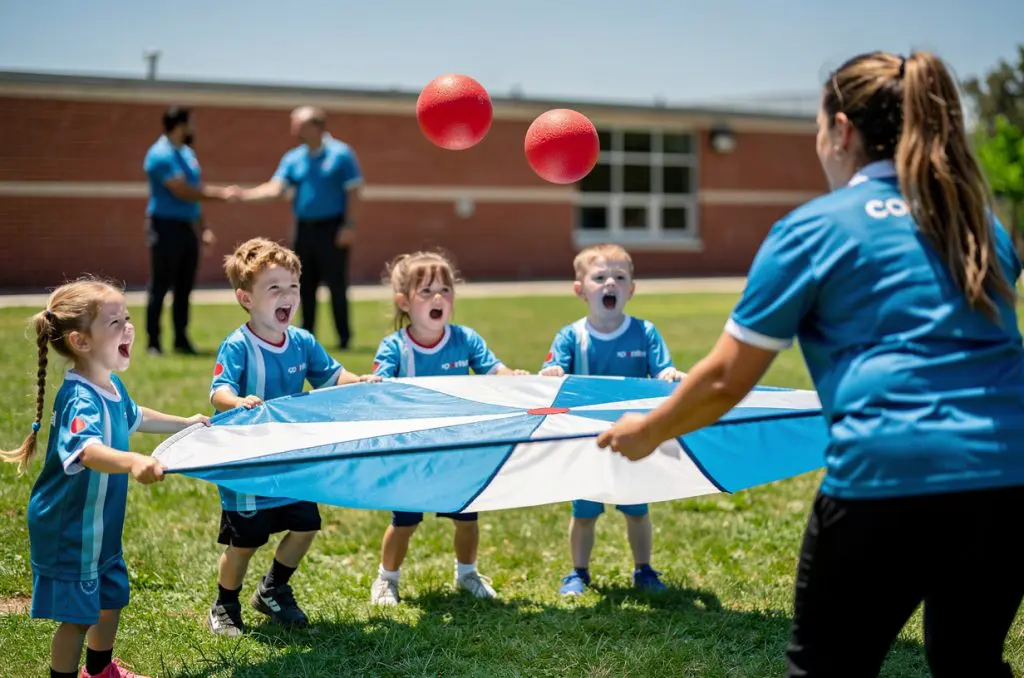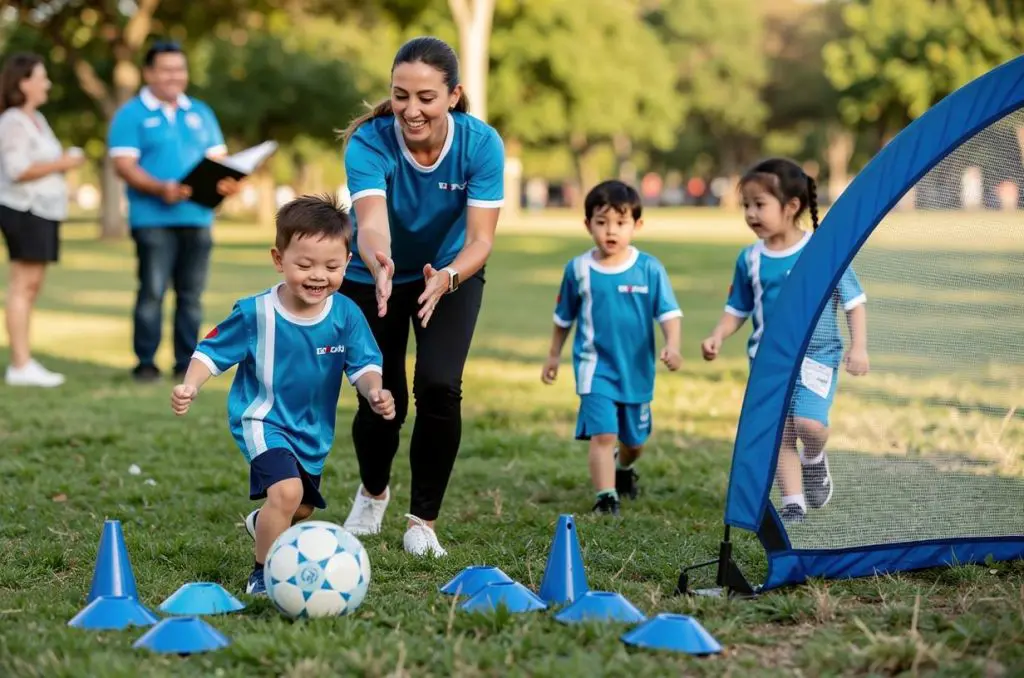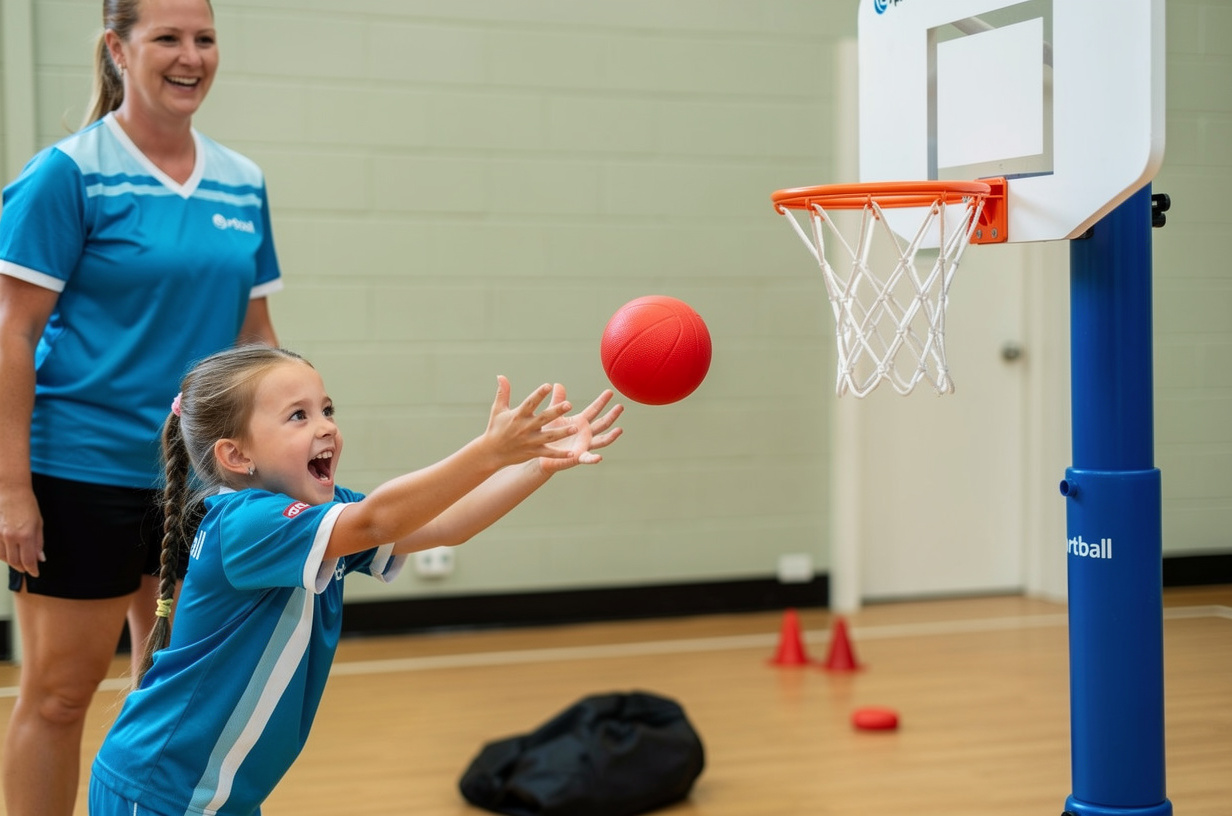
What are the best low-overhead kids sports franchises? The lowest-overhead models are mobile: they run programs in schools, child care centers, parks, and recreation centers, so the owner never signs a retail lease or pays for a build-out. Sportball is one of them. We have no storefront, our programs run in partner venues rented by the hour, and some of our owners handle admin from home.
Low overhead does not mean low effort, though. A mobile kids sports franchise swaps rent and construction for two other jobs: winning venue partners and building a team of coaches. This guide covers how the cost structure differs from a facility, where programs run, how owners grow, and what “home-based” means in practice.
Facility vs mobile costs
A facility-based kids franchise carries fixed costs from the day the lease is signed, whether or not classes are full. A mobile franchise carries mostly variable costs: venue fees and coach wages go up and down with the class schedule.
Two public benchmarks show the size of the gap. CBRE reports the average U.S. retail asking rent at $24.89 per square foot in Q3 2026. Cushman & Wakefield’s 2026 guide puts the national average for in-line retail fit-out at $157 per square foot, ranging from $120 in the Midwest to $217 in Northern California. At those averages, every 1,000 square feet of space implies roughly $25,000 a year in asking rent and about $157,000 in fit-out. Real costs vary widely by market, but neither line exists in a mobile model.
| Cost line | Facility-based kids franchise | Mobile kids franchise (how Sportball runs) |
|---|---|---|
| Lease | Multi-year retail lease, owed every month regardless of enrollment | No retail lease. Shared-use space is rented by the hour, so venue costs follow the class schedule |
| Build-out | Construction, fixtures, and signage before the first class | None. Classes use gyms, fields and rooms that already exist |
| Equipment | Installed or permanent equipment sized to the facility | Portable equipment sets instead of installed equipment. Our owners start with one multi-sport set and one t-ball/soccer set |
| Staffing | Staff scheduled around the facility’s opening hours | Coaches scheduled around booked classes. Recruiting and training them is the core operating skill |
| How you grow | Fill the building, then open another one | Add coaches, programs, and partner venues inside one exclusive territory |
Mobile owners still pay for space. Hourly venue fees are a real expense, and so are coach wages, insurance, and marketing. The difference is that those costs scale with revenue instead of arriving before it. Our guide to sports franchise costs breaks down the lines in more detail.
For reference, the initial investment for a Sportball franchise is $160,000: a $60,000 franchise fee plus $100,000 in operating capital to run the business over its first several months. Ongoing fees are an 8% royalty and a 2% ad fund fee on gross sales. That total is not the lowest among mobile models, and some list less. Compare what each figure includes, especially how many months of working capital it assumes.
Where mobile programs run
Without a storefront, the venue network is the business. Each partner type has its own schedule, buyer, and payment model, and a healthy territory uses several of them so that weekday mornings, after-school hours, and weekends are all working.
- Child care centers. Programs run on site during the day, grouped by age band: toddlers (16–24 months), preschoolers (2–4 years), and big kids (4–6 years). This fills weekday daytime hours that after-school programs can’t.
- Public and private schools. We run co-curricular programs with teachers during the school day, extracurricular programs before school, at lunch, and after school (paid by parents, one to five times a week), and full-day Sports Days paid by the school.
- Recreation and community centers. The center gets turnkey programming. We handle hiring, training, scheduling, equipment, safety protocols, operations, quality assurance, and family relations, and the partner helps with promotion and registration. Parks agencies already work this way: the National Recreation and Park Association found that five in six park and recreation agencies work with partners to deliver youth sports, and only 8% run everything themselves. Among partner types, 46% of agencies cite school systems and 19% cite local businesses.
- Churches and rental halls. Church gyms and rental halls rent by the hour for community classes.
- Parks and fields. Outdoor seasons, camps, and community events.
- Private clubs. Clubs and other organizations with an underused gym or field add a kids program for members and earn revenue from space that would otherwise sit empty.
Together, partner venues like these make up the 900+ program locations where Sportball classes run worldwide, reaching more than 70,000 kids a year in four countries. Those are places where classes happen, not franchise units: one territory runs programs at many venues.
Owner proof: Brooklyn and Austin
Maddie Vera, Sportball Brooklyn. Maddie, one of the owners profiled in our owner stories, has run Sportball Brooklyn for about 16 years, and her programs are mostly school-based: public and private schools, community centers, after-school programs, and daycares. She came from a children’s dance franchise with, in her words, “not a lot of experience with sports.” Her advice for selling to schools is to let them watch a class: “Get the demo. Get the demo. Get the demo, because once educators see, parents see this program in action, it’s hard for them to say no.” You can hear the rest in her interview, Leaving A Community Legacy.
Mica and Alyssa Villalon, Sportball Austin and San Antonio East. The Villalons both started as Sportball coaches, became owners of our first U.S. franchise in 2012, and grew their team from 5 coaches to 18. Their programs reach families within about 50 miles of Austin through partners that include the YMCA’s extended care program, the West Austin Youth Association, the cities of Round Rock and Leander, and private schools and preschools. They added San Antonio East in 2026. They tell the story in A day in the life of a Sportball franchise owner: Austin, Texas.
Growing without new locations
A facility has a ceiling: the building holds a set number of classes per week, and the next step up is a second lease. A mobile territory grows along three lines, none of which needs construction.
- Add coaches. Each trained coach adds class capacity. Some of our owners start with 2 to 3 coaches and scale to 200+.
- Add programs. One territory can sell seasonal classes to families, school and child care programs, camps, birthday parties, and private and community events. Sportball Adapted Programming serves children with additional needs.
- Add venues. Every new school, child care center, or community center is a new place to run classes inside the same territory. Our territories are exclusive and typically cover about 400,000 people, adjusted for geography.
Growth often starts small. Luke Lavorato of Sportball Edmonton, who began with classes of two or three kids, puts it this way: “The biggest thing that helped us to grow was running a great class. So when you run a great Sportball class, word of mouth spreads.” One birthday party in a single Edmonton neighborhood turned into a full set of Saturday classes.
The constraint on this kind of growth is people. Hiring coaches is the hardest part of running a Sportball franchise, and every owner we interview says so. Maddie Vera calls it “by far the biggest challenge.” Luke’s version: “We don’t sell widgets; we sell children’s programming. So your coaches are your product.” That is why our system puts so much weight on coach training, with a four-level certification path from Rookie to Master, online lesson plans, workshops, and skill demonstration videos.
Owners don’t build the team or the venue network alone. A Growth Coach, an experienced operator who has run their own operation, mentors each new owner for three months during setup and stays involved afterward, alongside group development sessions with other owners. Every owner we interview credits that support.
On revenue, our 2025 FDD Item 19 reports average gross sales of $270,686, median gross sales of $215,604, and highest gross sales of $653,458. These are gross sales, not profit, stated before the royalty, ad fund fee, coach wages, venue rental, and every other cost, and they don’t predict what a new territory will earn. At least half of the units counted had gross sales at or below the median, so it is the more cautious reference point. Read the complete Item 19 in the FDD, including its notes, before relying on any figure. The Sportball Franchise Information Report explains how to read them.
What “home-based” really means
“Home-based franchise” is easy to misread. In a mobile kids sports franchise it describes where the admin happens, not where the work happens or how much of it there is.
- Admin at home. Scheduling, payroll, registrations, and partner emails can run from a home office. Some of our owners work this way and others prefer a small office. Our registration platform (app.sportball.com), Sportball Central for CRM and payments, automated email, KPI reporting, and SportballGPT are all Sportball-owned.
- Programs in the community. Classes happen at partner venues. Owners spend real time on site: meeting school directors, running demos, watching classes, and coaching coaches. Most of our owners are also involved in the programs themselves.
- Still a full-time role. Sportball is designed as a full-time business and is not for passive or semi-absentee investors. Owners may start part-time during initial setup, but we strongly recommend at least one full-time leader from day one. As the Villalons put it, “This is not the kind of business where you can just phone it in.”
A typical week includes hiring and training coaches, booking venues, managing class schedules, running local marketing, and working with families on program quality. What home-based does buy you is control over the calendar. Alyssa Villalon: “Being a franchisee actually allows me to have full control over my schedule, so my work-life balance is exactly what I make of it. I get to pick up my kids every day from school.”
One practical note for U.S. owners: a home office may qualify for a tax deduction only if part of the home is used exclusively and regularly for business, according to the IRS. Check your own situation with a tax professional.
Mobile kids franchise models
Mobile kids franchises fall into four broad models:
- Multi-sport developmental classes. Non-competitive classes that rotate through several sports, led by trained coaches at partner venues. This is our model: eight core sports for children 16 months to 12 years, with a curriculum developed with the University of Toronto and the Children’s Hospital of Eastern Ontario.
- Single-sport classes. The same partner-venue delivery, built around a single sport, such as soccer.
- Recreational leagues. Games and practices on rented fields and courts, one sport per season, often relying on volunteer coaches. Our owners see leagues as a next step for their students, not a rival.
- Mobile fitness and movement programs. General fitness, gymnastics, or dance-style enrichment delivered at child care centers and schools, sometimes from a vehicle.
For a brand-by-brand look at investment, age ranges and owner involvement, see our comparison of the best kids sports franchises to own. For definitions of each model, start with what a sports franchise is.
Frequently asked questions
What is a mobile kids sports franchise?
A mobile kids sports franchise delivers classes, camps, and events at venues it doesn’t own, such as schools, child care centers, recreation centers, churches, and parks. The owner pays for space by the hour instead of signing a retail lease, and grows by adding coaches, programs, and venues within a territory.
Can I run a kids franchise from home?
You can run the admin from home. At Sportball, some owners do and others keep an office. The programs themselves run at partner venues in the community, and the role is full-time: we recommend at least one full-time leader from day one, and the business is not suited to passive or semi-absentee ownership.
Do mobile franchises still pay for space?
Yes. Mobile owners pay venue fees, typically renting shared-use space by the hour. The difference from a facility is that there is no multi-year lease or build-out to fund before the first class, and venue costs rise and fall with the number of classes booked.
What does a low-overhead franchise cost?
It varies by brand and by what each estimate includes. A Sportball franchise requires a total initial investment of $160,000: a $60,000 franchise fee and $100,000 in operating capital for the first several months. Ongoing fees are an 8% royalty and a 2% ad fund fee on gross sales. We don’t offer in-house financing, so candidates who need it start talking with their own lender in the first week of discovery.
How long does it take to open?
Sportball franchises typically open 2 to 6 months after the first call, depending on how quickly you work through the business plan process. Our discovery process runs 12 weeks, includes a Discovery Day, and ends with signing after the 14-day disclosure period. Under the FTC Franchise Rule, a franchisor must provide its disclosure document at least 14 calendar days before you sign or pay. After signing, training includes 1 to 2 weeks in person, the 8-week Sportball University launch program, and three months of Growth Coach mentorship. Our training and support guide walks through each stage.
Does this model fit you?
If you want to build a kids business around coaches and community partners instead of a lease, the next step is a conversation with a Growth Coach. Territory availability changes as markets sell, so start your discovery here or check our available territories for your area.
This information is not intended as an offer to sell, or the solicitation of an offer to buy, a franchise. It is for informational purposes only. Within the U.S., Sportball offers franchises solely through its Franchise Disclosure Document, and will not offer a franchise in states that regulate franchise sales until it has complied with applicable registration and disclosure requirements.