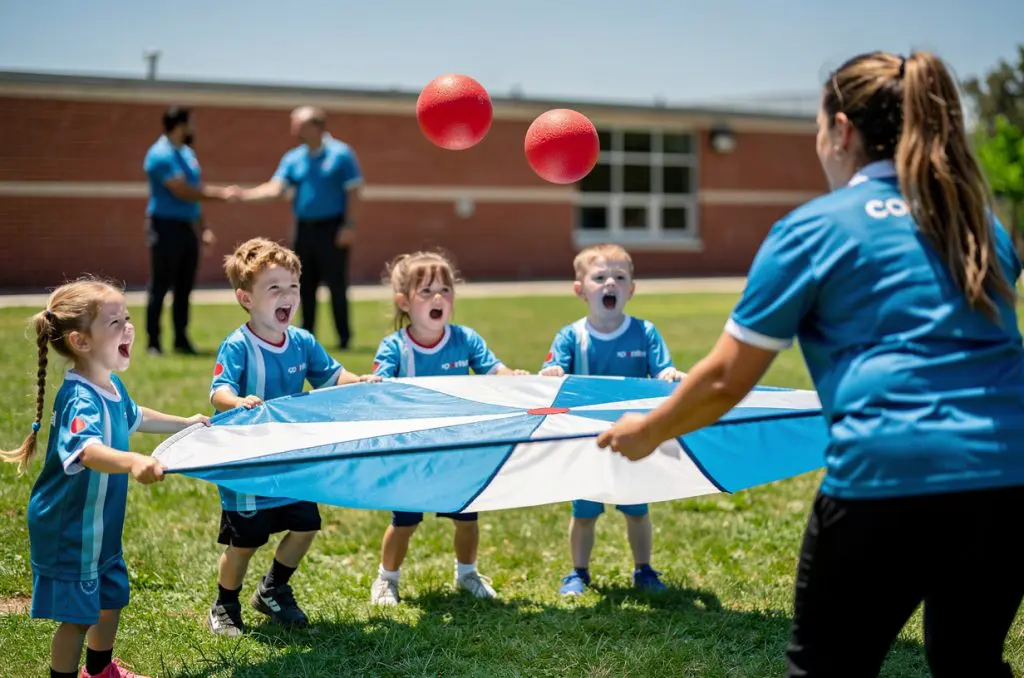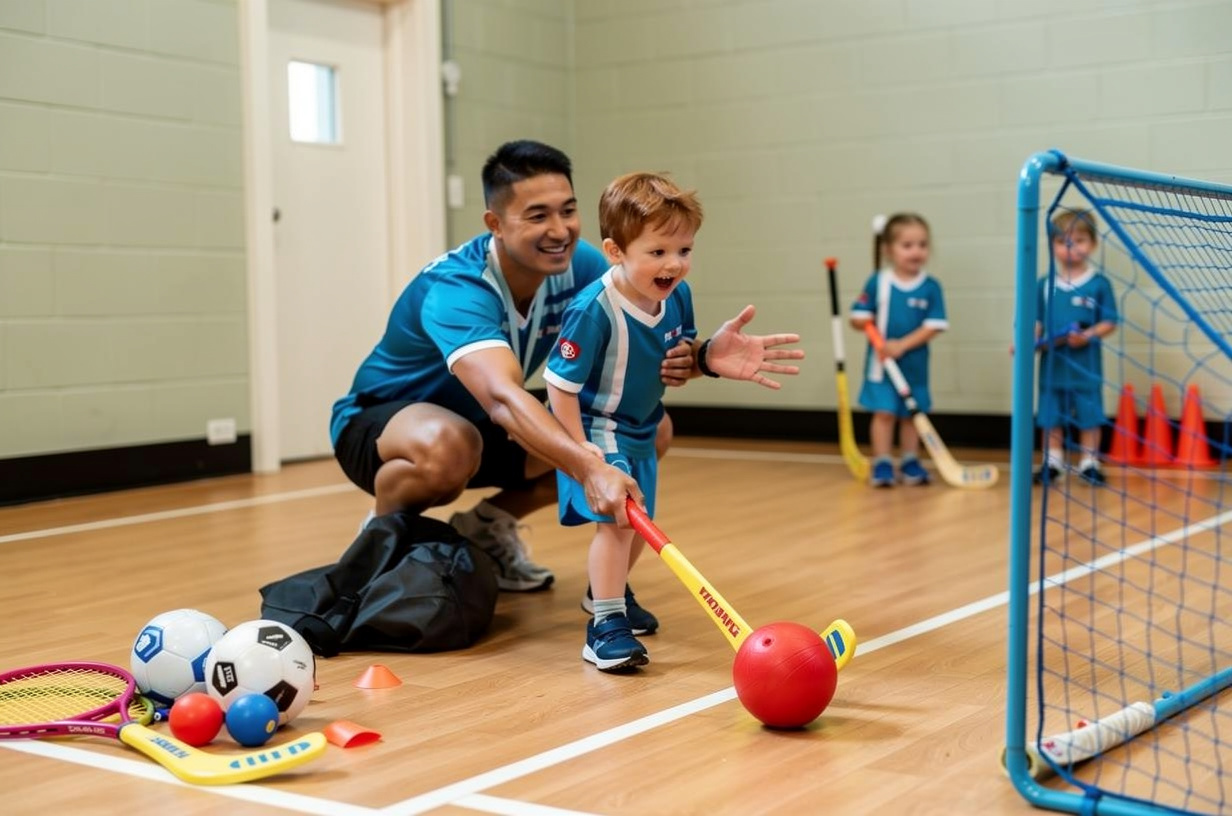
The best kids sports franchises fall into four models: multi-sport class programs (Sportball, Amazing Athletes, Skyhawks/SuperTots, Kidokinetics), single-sport programs (Soccer Shots, Little Kickers, TGA Premier Sports), leagues (i9 Sports), and dedicated facilities (KidStrong, The Little Gym). Which one is best for you depends on the ages you want to serve, whether you want a lease, and how much capital you can commit. Sportball is the multi-sport, non-competitive option for children ages 16 months to 12, run in partner venues with no storefront.
We are one of the brands in this comparison, so we’ve held ourselves to a simple rule: every competitor figure below comes from that brand’s own franchise site or the FDD it cites, with a link. Where a brand doesn’t publish a number, the table says “not published” instead of borrowing one from a directory.
Youth sports franchises compared
Brand sites were checked in November 2026. Investment figures are in U.S. dollars unless marked, and the year shown is the FDD year the brand cites; “site” means the brand’s franchise site gives the figure without naming an FDD year.
| Brand | Model | Ages served | Facility required? | Published initial investment (source, year) | Royalty | Countries |
|---|---|---|---|---|---|---|
| Sportball | Multi-sport, non-competitive classes (eight core sports) | 16 months to 12 years | No. Programs run in schools, child care centers, community centers, and parks | $160,000: a $60,000 franchise fee plus $100,000 in operating capital (Sportball, 2026) | 8%, plus a 2% ad fund fee | Canada, U.S., Singapore, India |
| Skyhawks / SuperTots | Multi-sport and sport-specific camps, classes, and leagues | 18 months to 5 (SuperTots); 4 to 14+ (Skyhawks) | No. Programs run with partner organizations | Total not published. Franchise fee $42,500; other listed startup items range from $12,300 to $41,250 (franchise site) | Not published | U.S. (30+ states) |
| Soccer Shots | Single-sport (soccer) classes | 2 to 8 | No. Coaches go to child care centers, schools, and parks | $42,950 to $54,300 (franchise site) | 7%, plus a 1% brand fund fee and a software fee starting at 2% | U.S. and Canada |
| Amazing Athletes | Multi-sport classes (10 sports) | 18 months to 12 years | No. Mobile model | $74,550 to $100,550 (franchise site, current FDD) | Not published | “North America”; countries not listed |
| i9 Sports | League (multi-sport leagues, camps, and clinics) | 3 to 14 | No. Home-based | $36,500 to $69,900, depending on a 5-year or 10-year agreement (franchise site) | Not published | U.S. |
| TGA Premier Sports | Sport-specific programs (golf, tennis, pickleball, and team sports) | Not published | No. Schools, community centers, courts, and courses | $72,750 to $111,250 (franchise site, 2025 FDD) | Not published | Not published |
| KidStrong | Facility (membership-based development and fitness classes) | Crawling age to 11 | Yes. 3,000- to 4,000-sq-ft center | $476,400 to $671,200 (franchise site) | Not published | U.S. and Canada |
| The Little Gym | Facility (gymnastics-based classes) | 4 months to 12 years | Yes. Leased gym with tenant improvements | $420,324 to $722,773 (franchise site, 2026 FDD) | Not published | U.S. and international; countries not listed |
| Little Kickers | Single-sport (soccer) classes | 18 months to 8 years | Not published | £15,500 to £24,500 (franchise site) | 10% management fee, plus a 1% marketing levy and a 0.5% IT levy | 27 countries |
| Kidokinetics | Multi-sport and fitness classes (mobile) | Not published | No. Home-based; equipment kept in a 100- to 200-sq-ft storage unit | $133,500 to $223,000 (franchise site) | Not published | Not published |
Notes on sources: Soccer Shots’ ages and footprint, and Little Kickers’ ages and country count, come from Soccer Shots’ franchise site, which describes Little Kickers as a related brand. Amazing Athletes’ ages and sport count are from its programs page, KidStrong’s from its franchise page, The Little Gym’s from its consumer site, and TGA’s venues from its business page. “Not published” means only that we couldn’t find the figure on the brand’s own franchise pages. Every U.S. franchisor discloses its royalty and other ongoing fees in Item 6 of its FDD, so ask for the document.
What the table shows
The model sets the cost. The two facility brands publish ranges that start above $420,000. No mobile brand’s published range goes above $223,000. The Little Gym’s own Item 7 table shows why: lease and tenant improvements alone run $135,240 to $325,644.
Totals aren’t built the same way. Our $160,000 figure is at the upper end of the mobile brands because it includes $100,000 in operating capital, enough to get the business running over several months. Most of the other mobile brands’ tables carry three months of “additional funds”: $2,350 to $4,200 at Soccer Shots, $8,000 to $13,000 at i9 Sports, and $10,000 to $20,000 at Amazing Athletes and TGA. i9 Sports says plainly that its figures “do not include funds that a franchise owner will need for living expenses while starting the business.” Compare what each total covers, then build your own runway into every one.
Age range is where mobile brands differ most. Soccer Shots and Little Kickers stop at 8. i9 Sports starts at 3. Sportball and Amazing Athletes each publish a single range that runs from toddlers to 12, and Skyhawks covers a similar span across its SuperTots and Skyhawks programs.
Royalties cluster where they’re published. The published royalty rates run from 7% to 10% of gross sales, with brand, marketing, or technology fees on top.
Four models and who they suit
Multi-sport class programs
Sportball, Amazing Athletes, Skyhawks/SuperTots, and Kidokinetics teach several sports through classes, camps, and school programs in partner venues. The owner’s main job is recruiting and leading coaches and building venue relationships. This model suits people who want a wide age range and several revenue streams from one territory, and who would rather sell “try everything” than one sport.
The case for sampling is well documented. An Aspen Institute Project Play report cites a U.S. Olympic Committee survey in which 7 out of 10 Olympians grew up as multi-sport athletes, and links sport sampling to less burnout and more lifelong enjoyment.
Single-sport programs
Soccer Shots and Little Kickers teach soccer to young children; TGA Premier Sports is built around golf, tennis, and pickleball. The pitch to parents is simple, and the published startup costs are the lowest in this comparison. The trade-off is a narrower age band and one sport’s seasonality. Project Play’s participation data shows the pattern: soccer draws more 6-year-olds than any other sport, at 21% participation, then declines every year after. We cover this model in more depth in our guide to owning a kids soccer franchise.
Leagues
i9 Sports runs recreational leagues, camps, and clinics in six sports for ages 3 to 14. League owners manage fields, schedules, and game days. It suits operators who enjoy logistics and want older kids and gameplay. i9 Sports says its leagues grow best with an owner’s full attention and discourages treating the business as a side gig.
Dedicated facilities
KidStrong and The Little Gym operate membership-based centers. You get a branded space you control and a predictable schedule. You also take on a lease, a build-out, and fixed costs before the first class, which is why these brands suit well-capitalized owners who are comfortable with real estate.
Our own primer, What Is a Sports Franchise?, compares fixed-location and mobile models in more detail.
How to choose
- Age range. A wider range means a family can stay enrolled longer. Ask each brand at what age most children leave the program and where they go next. Ours runs from 16 months to 12 years, and our owners see league sports as the next step for their students, not a rival.
- Facility vs. mobile. A facility gives you control and visibility at several times the published startup cost. A mobile model grows by adding coaches and venues inside the territory, so the constraint is hiring and partnerships, not square footage.
- Single-sport vs. multi-sport. Single-sport is easier to explain in one line. Multi-sport gives you more to offer the same family year-round and more ways into a school or community center. Decide which sales conversation you’d rather have a few hundred times.
- Territory size. Ask for the population, whether it’s exclusive, and how the boundary is drawn. Most brands don’t publish this, so compare it in the FDD. Ours are exclusive and typically cover about 400,000 people.
- Support. Ask who answers the phone after launch and whether they’ve run an operation themselves. Ask what the brand provides for coach hiring and training specifically, because every owner in this category will tell you that’s the hard part. Then call current franchisees and check.
For every brand on your shortlist, read Item 7 (startup costs), Item 6 (ongoing fees), Item 19 (financial performance, if the brand provides one), and Item 20 (how many units opened, closed, and transferred).
Why owners pick Sportball
Eight sports in one program
Our signature program rotates through soccer, basketball, baseball/t-ball, football, hockey, volleyball, tennis, and golf, so kids learn to love sport, not a sport. For an owner, that means one program to sell from age 16 months to 12, with more sports added where regional demand calls for them, such as cricket, lacrosse, and pickleball.
Built with U of Toronto and CHEO
We developed our curriculum by working with research institutions including the University of Toronto and The Children’s Hospital of Eastern Ontario. It’s built around childhood development milestones, and every activity develops physical literacy, social skills, and sport skills together. Owners don’t design a curriculum; they train coaches to deliver one, through a four-level certification path from Rookie to Master.
That’s what decided it for Tina Cannon-Griffith, who ran a child development center for about 20 years before co-owning our West Houston territory. Asked why she chose us over other youth sports brands, she said: “It was the methodology and where you start with the coaching.”
Owners stay an average of 7.5 years
Our current franchisees have been with us for an average of 7.5 years. Several have expanded into second, third, and fourth territories, and many started as Sportball coaches or parents. Luke Lavorato turned down corporate job offers to open Sportball Edmonton about 18 years ago, and describes the business this way: “We don’t sell widgets; we sell children’s programming. So your coaches are your product.”
The numbers we publish
- Investment: $160,000 in total, made up of a $60,000 franchise fee and $100,000 in operating capital. We don’t offer in-house financing; prospects who need it start talking with their own lender in the first week of discovery.
- Ongoing fees: an 8% royalty and a 2% ad fund fee on gross sales.
- Financial performance: our 2025 FDD Item 19 reports average gross sales of $270,686, a median of $215,604, and a high of $653,458. These are gross sales, not profit, and your results will differ.
- Overhead: no storefront, lease, or build-out. Programs run at 900+ schools, child care centers, and community venues worldwide, which are partner venues inside franchise territories, not franchise units.
- Timeline: typically 2 to 6 months from first call to opening.
- Support: 1 to 2 weeks of in-person training, an 8-week launch program, a three-month mentorship from a Growth Coach who has run an operation, and our own registration platform.
Who we’re not the right fit for
We recommend at least one full-time leader from day one, so we’re a poor match for anyone who wants a passive or part-time investment. If you want one sport and the lowest possible entry cost, a single-sport brand will suit you better. If you want your own building, look at the facility brands. And we only offer U.S. franchises in the states where we’re able to: territories are currently available in 38 states and the District of Columbia, so check availability for your city before you get attached to the idea.
Frequently Asked Questions
Which kids sports franchises are best?
The best choice depends on the model you want to run. For multi-sport classes, look at Sportball, Amazing Athletes, Skyhawks/SuperTots, and Kidokinetics. For single-sport programs, consider Soccer Shots, Little Kickers, and TGA Premier Sports. For leagues, i9 Sports. For a dedicated facility, KidStrong and The Little Gym. Sportball is the multi-sport, non-competitive option for ages 16 months to 12.
What does a kids sports franchise cost?
Published initial investments for mobile brands in this comparison range from $36,500 (i9 Sports’ 5-year agreement) to $223,000 (the top of Kidokinetics’ range). Facility brands publish ranges from $420,324 to $722,773. A Sportball franchise is $160,000: a $60,000 franchise fee plus $100,000 in operating capital. Our cost guide explains what drives these differences between models.
Do you need a facility?
No, not for most brands. Seven of the ten brands compared here say they run in partner venues such as schools, child care centers, and parks, or are home-based. KidStrong and The Little Gym require a dedicated center, and Little Kickers doesn’t say on the pages we reviewed. Sportball has no storefront, lease, or build-out; some of our owners run the business from home and others from an office.
Is multi-sport or single-sport better?
Neither is better for every owner. Single-sport programs are simpler to market and cheaper to start. Multi-sport programs serve a wider age range and give a family more reasons to re-enroll. For children, the Aspen Institute’s Project Play associates sport sampling with less burnout and more lifelong enjoyment, which is the reason our curriculum rotates through eight sports.
Do you need a sports background?
No. At Sportball, most franchise partners come from business or child enrichment backgrounds, and TGA Premier Sports also says extensive sports experience isn’t necessary. The skill that matters more is recruiting, training, and leading a team of coaches. Maddie Vera has run Sportball Brooklyn for about 16 years with, in her words, “not a lot of experience with sports.”
Next step
If the multi-sport, non-competitive model fits what you want to build, watch our discovery video and book a call with a Growth Coach. The first conversation is about mutual fit, and you’ll build your own business plan before either side commits.
This information is not intended as an offer to sell, or the solicitation of an offer to buy, a franchise. It is for informational purposes only. Within the U.S., Sportball offers franchises solely through its Franchise Disclosure Document (FDD). Several states, including California, Hawaii, Illinois, Indiana, Maryland, Michigan, Minnesota, New York, North Dakota, Rhode Island, South Dakota, Virginia, Washington, and Wisconsin, regulate the offer and sale of franchises. Sportball will not offer a franchise in those states until it has complied with applicable pre-sale registration and disclosure requirements. Competitor figures are taken from each brand’s public franchise pages as of November 2026 and may change; confirm them in each brand’s current FDD.